LIBRARY
Blog Copy
Sorry, no results were found, search again?
December 5, 2021
Three race preparation workouts to find your edge
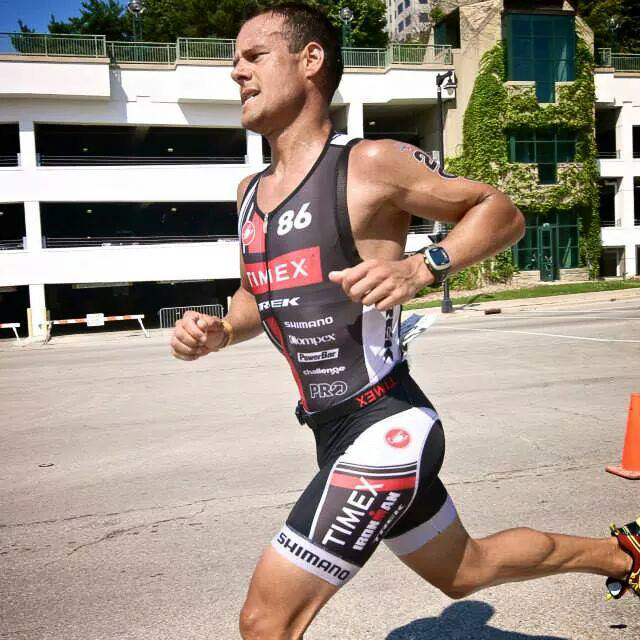
As you get close to a goal race, finding that extra edge on race day is a combination of physical and mental preparation and both being and feeling ready. Training sessions that simulate race conditions ensure your body is physiologically ready and allows you to get your head in the game. Here are three ‘ace preparation workouts that one can use to prep for 70.3 and shorter races. Ideally done 3-6 weeks out (not on your taper week), after your main training weeks have been completed and the race gets closer.
Workout #1: Swim-Bike
The purpose of this workout is to practice the physiological demands of going straight from a swim to a bike effort. Many athletes have a hard time transitioning from the swim to the bike in races. This workout is a little below race effort so the athlete can practice the two disciplines back to back and build their confidence. The bike has hill repeats to build in some strength work following a short adaptation segment following the swim.
Swim:
30 minutes at an intermediate to moderately hard effort (Zone 2/3). This is ideally done in the open water, but can be done in the pool as well if necessary.
Quickly transition to the bike:
Bike:
15 minutes on flat roads at Z1-2 heart rate then
Hill Repeats: 6 x 3 minutes at Zone 3/4 on 2 minute recoveries or time to get back down to starting point
Cool down: 10 minutes @ low Zone 1 heart rate
Workout #2: Bike-Run
The purpose of this workout is to practice a tempo brick effort and to simulate the feeling of running fast off the bike in a race. One of the benefits of tempo brick off the bike, is to help an athlete move through the sensation of tired legs and learn to get up to speed. Athletes will feel tired legs coming off the bike section, then have to get their legs turning over in order to get up to effort quickly. You need to really focus and work hard on the bike in order to maintain mid to high zone 3 heart rate, then really dial in your run effort in order to get right up to high zone 3 and eventually build to low zone 4.
Warm up:
Bike: 15 minutes building from Zone 1 to Zone 2
Main set:
Bike: 30 minutes: mid to high Zone 3
Quickly transition to run
Run: 15 minutes: high Zone 3 to low Zone 4
Cool down: 10 min jog at low Zone 1
Workout #3: Swim-Bike-Run
This is a very challenging set and can be used to prep for an Olympic distance race. It is a sub-threshold set and really gets an athlete used to putting out a high effort, recovering, and then going again. This is a great workout for building mental strength as well and the fortitude and mindset required to have a successful triathlon.
This workout can be done at a pool or open water setting. The bike should be done on a trainer on or near the pool deck or at the open water swim venue. The run should be performed on a relatively flat measured course right at the venue.
Warm up swim: 10 x 50 alternate free and choice stroke/ 4 x 50 as 25 sprint/25 easy on 15 seconds recovery
Repeat this superset 3 times
Swim: 400 yards/meters at goal race effort
Bike: 5 minutes building heart rate as quickly as possible to zone 4 and holding
Run: 400 meters at between 5k and 10k race pace – Zone 4 heart rate
Recover: 5 minutes active: i.e. walking, light jog.
Race preparation and race simulation sessions are a key tool in training for triathlon. They are specific and hard practices and should be used judiciously in training. Done properly, then help you become a better mental athlete and get your body fine-tuned for the demands of race day.
LifeSport coach Chris Thomas is a USAT certified coach who is currently ranked one of the top amateur triathletes in the world. Chris is certified to work with both youth and seniors. Contact Chris to share your goals, race faster, or master the Ironman distance.
December 5, 2021
Five attributes of age group Kona qualifiers
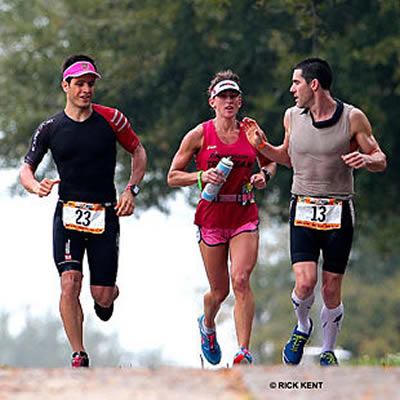
When examining athletes that have qualified for the IRONMAN World Championships, there are many common attributes throughout each age group. The levels of competition are so strong that there is no accidental way of rising to the top. It is harder and harder to qualify with more IRONMAN events worldwide and limited spots to race in Kona. To be able to stand on the podium at any IRONMAN, all the competitors arrive with peak preparation- they are in their best physical shape. What sets the champions apart is their mental edge, which is cultivated intentionally in training and through past race experiences. In my many years of coaching I have come to see some common themes in mental traits shared by top age group athletes.
Commitment
The number one attribute is commitment to the A-race goal. The majority of age group athletes have incredibly busy lives; many work demanding full time jobs and will often have a family as well. The athletes that make it to Kona are those who, with the support of their spouse or significant other, make it their priority to commit to getting the required training in. They review their training schedule in TrainingPeaks the week prior. They then plan their work/social schedule with the completion of training being the number one goal. If this means joining a 6:00am Masters Group or getting up at 5:00am for a trainer session, that is what they do. They then figure out how to fit everything else in their life around it.
Positive Mental Attitude
To balance the long and arduous physical preparation of reaching the top, champions consistently maintain a positive mental attitude. Racing the IRONMAN distance as an amateur is tough and there is no financial reward. This doesn’t mean there aren’t moments of down, but overall thoughts are positive – this is reflected in the adage, if it was easy, everyone would do it! Therefore it must be a passion. One can’t put in 15 to 20 hour training weeks without a positive mental attitude and a strong sense of self-motivation to assist getting up early mornings and heading out when it’s cold and dark.
Along with the positive attitude is the use of positive imagery. They show up to practice ready to embrace the workout, whatever the coach prescribes. Successful qualifiers will visualize their success as they train. In their mind they will see themselves exiting the water after a strong swim, cresting a hill with a sense of power and even running through the finishing chute as a champion. They will also have cues as to how they will to feel on certain parts of the course.
By the same token they have to ability to compartmentalize. If a particular workout doesn’t go well, there is the immediate reflection of what happened and why. Then it is put aside and the athlete will move on to the next one. No dwelling on the past. The athlete has a strong self-belief in their abilities which is backed up by their previous training data.
Patience
Preparing for and racing an IRONMAN is not a venture one undertakes if one is seeking an instant reward. Getting to the start line healthy and strong requires that all the building blocks along the way were set in place properly and in the correct order. This is a process that takes years, not months or weeks. And that is just to get to the start line. Once the gun fires, an IRONMAN day unfolds steadily minute by minute, hour by hour.
When they are racing, champions don’t get ahead of where they are in the race. They focus their mental energy on getting the most out of their body at that moment. If it’s a tough part of the swim they are thinking about perfect technique for every stroke. On a climb, if a competitor is pulling away, they focus on pushing with a power they can maintain. It is necessary to stay in the moment. I often say to my athletes you don’t “race” the IRONMAN until the second half of the marathon.
Confidence
You can’t control who shows up to an event. Kona qualifiers perform on the day to the best of their own abilities and don’t get carried away with who else is there or what they are doing. Many things can happen during an IRONMAN and will immediately change the day, whether it is a mechanical, poor pacing or nutritional mistake. From consistent training, the top athletes know their swim splits, power outputs on the bike and run paces. They know there is no magic piece of equipment that is going to make them go 20% or 30% faster. They know exactly what they are capable of and stick to the plan they set out with their coach. This confidence comes partially from the physical preparation for the event.
They are also methodical. Everything related to racing the IRONMAN is laid out beforehand. In the months leading up to the race all equipment is tried and tested, discarded if it doesn’t fit or work. Nutritional plans are dialed in regularly on training rides and runs. As I have written about in the past pre-riding the course or simulating the terrain during takes the guesswork out come race day. This way there is no last minute scrambling or unsureness whether something is.
Toughness
I have often heard my athletes being labelled tough in the face of adversity. Especially after a race that was cold or held in terrible conditions. Or how a racer recovered after an especially bad patch on the run. I prefer to look at this as that athlete staying in the moment and just focusing on what they can do right then. If they can’t run, at least walk fast; if they are grumpy and low in energy, have something to eat. The important thing is that champions look for the best option for any given situation. They also anticipate the hard parts of the course and prepare for the physical discomfort. These sections are opportunities, not a section to dread.
There are many factors that play a part in how champions rise to the top; the mental game is definitely just as important as being physically prepared.
LifeSport head coach Lance Watson has coached a number of Ironman, Olympic and age-group Champions over the past 28 years. He enjoys coaching athletes of all levels. Contact Lance to share your goals, race faster, or master the Ironman distance.
December 5, 2021
Preparing for your first triathlon
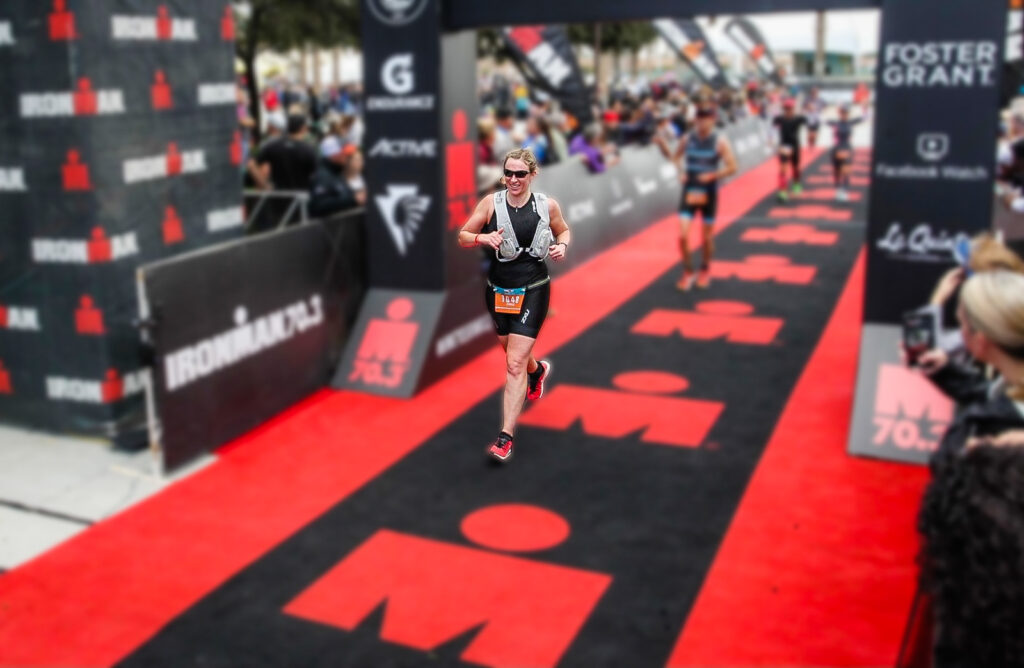
Preparing for Your First Triathlon
With the booming growth of Ironman and the spectacular addition of triathlon to the Olympics, our sport has grown in leaps and bounds – especially in North America. Today, there are more people training for and competing in triathlon than ever before and there is no better time to consider participating in your first multi-sport event. If you are already running races, you will have a great base of cardiovascular fitness. You can use that base as a platform for triathlon, and enjoy the challenge of learning some new skills!
In completing your first triathlon there are some key concepts that you need to keep in mind, the most important being “enjoy the experience”. From the day that you decide to do the race until you cross the finish line, relish the experience. You will quickly find out that triathlon is a lifestyle more than a race. Don’t place unrealistic expectations on yourself for your first race or undue pressure. A triathlon is as much a social gathering as it is a race, and for the first time you should treat it as such.
The following are some basic suggestions that will help you in getting your first race under your belt with as few unexpected surprises as possible (except for how well you are going to do!)
Choose the event that you want to compete in.
This may be a local fun race, or you may want to travel for a fitness race-vacation. It is up to you, but make sure that it is something that excites you, and motivates you to get to the start line. Look for an appropriate event early in the year as the most popular events are filling up very quickly. Finally, pick an event at least 3 months away so that you have time to prepare for it. Most athletes start with a sprint or Olympic distance race as their first. These distances will provide the greatest chance of early success.
Get a coach and a training partner.
Once you have decided upon completing your first triathlon, drag a friend/partner/relative into it with you, and get a coach. There are some good reasons for this. Training with someone is more fun, and sharing the experience is more inspiring. Those mornings that your pillow is calling you back to bed, the knowledge that someone is waiting for you will be a call to action! Working with a coach is a good idea, as they will actively work to keep you motivated while guiding you through your first season. Make sure the coach you choose is experienced and has a proven track record.
Finding facilities
You will need to find some facilities in which to practice. Running is easy, it can be done outside almost all year round (dress appropriately!). Biking and swimming take some planning. Most communities have at least one pool and many gyms are now offering spin classes, which work well in lieu of outdoor riding. The local YM-YWCA will be a good, inexpensive choice, but depending on your schedule and budget there may well be other options. Pick a facility that motivates you to go, taking all factors into consideration; even if a gym has nice scenery, and state of the art machines, if you have to fight traffic after work to get there you may end up avoiding the place. Plan to try some outdoor riding on quieter, country roads.
Developing a Program
You’ve taken the hardest step – the first one. You’ve decided to begin training; but don’t train in vain. Train smart. You want to get the most you can from the time that you are investing in training. More doesn’t equal better.
Having a program to follow will help you to maintain your motivation, get you to workouts, and develop your burgeoning talent. The best way to ensure that you are maximizing your training is to get a coach, but if that is not a viable option, it is possible to figure out a basic training plan through doing some research.
One common mistake that new triathletes make when starting out is training their best event. Running fast after struggling through a swim practice gives them a feeling of confidence. Nobody is equally strong in all three disciplines of triathlon, so focus more on your primary area for improvement so that you become a well-rounded triathlete. For example, if you are a weaker swimmer, try to hit the pool three times a week, and bike and run twice a week.
Progression
Make sure that your training is moving forward at an appropriate pace. Ensure that you are not doing the same schedule week after week, with the same workouts. You need to increase the speed, intensity, or duration of your workouts or else you will plateau. Likewise, be careful not to increase your distance or intensity too much at a time. A safe rate of increase is to up your distance by no more that 10% a week. In your progression, plan in a day or two of complete rest (from training that is) each week, and an easier recovery week every third or fourth week of your training plan.
Equipment Needed
As with almost every sport, you are going to be required to procure some equipment so that you can complete your first triathlon. You don’t need to rush out and buy these things, in fact I recommend against that. Wait until you have done one or two events, to decide if you really need it. The basics you will need to beg, borrow, or steal are:
- Running shoes
- Bike: Any safe bike with functioning gears will do. A road bike is preferable.
- Bike Helmet (Safety Approved)
- Swimsuit
- Goggles
- Wetsuit (to at least borrow for race day)
There are also a multitude of other little goodies that will assist you in both training and completing triathlons as quickly as possible. A couple of little hints to make life easier are:
- A floor bike pump (to pump up your tires)
- Wind/Magnetic/Fluid/Compu Trainer (allows for indoor riding – think stationary bike)
- Cycling shorts and jersey
- PowerGels for easy race nutrition
- Elastic laces (so you don’t have to tie your shoes in transition)
- Sunglasses (they will not only make you look cool, but protect your eyes from the sun, bugs, and little rocks that shoot up during a ride)
Fuel your Engine!
Your car requires fuel. You wouldn’t drive your car without gas and oil in it. And you don’t put leaded gasoline in a Ferrari. Your body is no different. Its gas is good quality carbohydrate and protein, and its oil is water. Try going for a long ride without taking some food, and you will find out what PowerBar means when they say “Don’t Bonk!” “Bonking” is the triathlete’s term for the feeling you encounter when your body runs out of carbohydrates. You become weak, disoriented and extremely fatigued. Eating properly 1-2 hours before workouts will help to prevent this from occurring. Taking energy supplements on longer training sessions will also aid in preventing bonking. Finally, after finishing a workout there is a thirty minute window where your body can optimally use carbohydrate to help recover from the workout and to get you feeling ready for the next session sooner. So always bring a snack in your gym bag, as well as a water bottle.
If you follow the advice above you will find your first triathlon to be an enjoyable and rewarding experience and is likely a starting point for a wonderful adventure in the sport. Above all, remember that the best advice is to have fun with it.
LifeSport head coach Lance Watson has coached a number of Ironman, Olympic and age-group Champions over the past 28 years. He enjoys coaching athletes of all levels. Contact Lance to share your goals, race faster, or master the Ironman distance.