LIBRARY
Blog Copy
Sorry, no results were found, search again?
December 5, 2021
Is there one right running form?

When we think of running, we typically think that it is an activity that is natural and something that we are born with. When looking at young kids running around, their movements are fluid and generally not affected by outside influences. One could say that as active children, generally their bodies (muscles and skeleton) are in a relative state of balance. As we get older there are many things that can affect how we hold ourselves running, whether it is poor posture, imbalances in strength as well as various levels of fitness.
At its most basic, running is the act of leaning forward and placing one foot in front of the other to stop it falling. The quicker this is done, the faster we go. There are many different styles and some runners look to have clumsy or poor form yet manage to run quite quickly. There are a couple of techniques that separate a good runner from a poor one, but there is no one perfect “form”.
Overstriding: this is the big one. It doesn’t matter so much if one lands forefoot, midfoot or heel, as long as the point of contact with the ground is under the hips (or center of mass). If the foot touches the ground below the hips the body can continue to pass forward over this point of contact with ease. Having the foot land in front of the body requires the mass to pass up and over the contact position and in order to do this, the quads and knees take a huge braking impact; resulting in a slower run time, earlier onset of fatigue and the increased possibility of injury. One of the best times to practice a smooth and well placed footfall is during base runs. Aim to run efficiently and with good form.
Running tall: One can easily tell a good runner, their heads are positioned so the eyes scan down the road, shoulders are square, arms swing in time with the feet and hips are forward, allowing the foot to land under them. Feet are turning over at a cadence of 165-185 strides per minute, often affected by height as well as experience. Many athletes lack core strength or have weak glute medius muscles which results in a posture that has the butt rearward, much like the athlete is sitting. By running tall we avoid overstriding and the head keeps everything under control.
There is no one “correct form”, but a number of key components are required to run well. In the end, it’s your run and yours alone. Embrace it. Be strong. And keep moving forward. Happy trails!
Based in Victoria, BC, LifeSport Senior Coach Dan Smith has been involved with multisport for over twenty years. He also regularly races and frequently gets on the top of his podium in his age group at local and World Championship events.
November 27, 2021
Jump in with SwimRun!
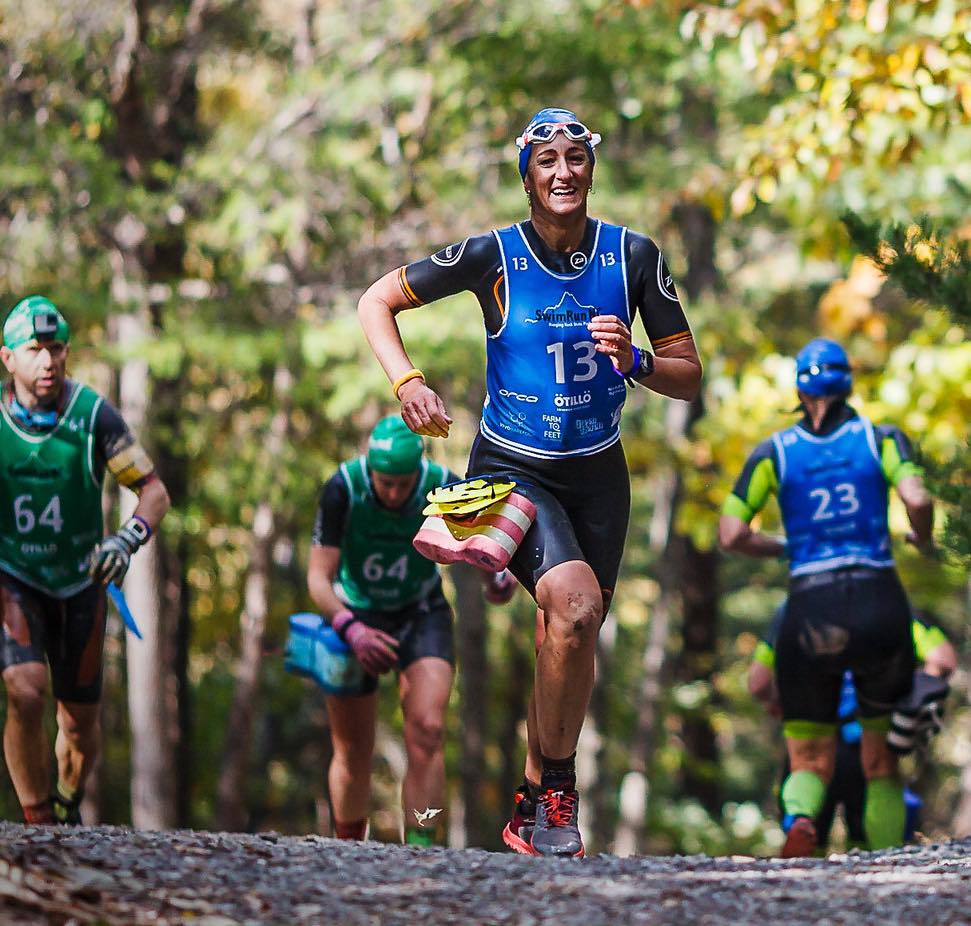
The Curious Sport of SwimRun. (Swimming with your Shoes On)
As an endurance athlete for over 30 years, it is always fun to find new ways to enjoy the great outdoors, including the sports I have grown to love.
SwimRun, yes, I spelled that correctly, is an emerging new sport. The concept of SwimRun originated in 2002 with the ÖtillÖ in Utö, Sweden. This event began as a drunken bet between friends, who challenged one another to swim and run a 75km (47-mile) course across 26 islands within Stockholm’s archipelago islands. Thankfully, most events are not that long, but they still include jumping in multiple cold bodies of water, competing with a partner that you are often tied to (tethered), swimming with your running shoes on, and running in your wetsuit. It is the perfect sport for an oversized child at heart who loves to play in the woods!
My introduction to the sport came a few years ago when I heard about SwimRun NC at Hanging Rock State Park. There were reports that you would climb up and through waterfalls and run up 624 steps to the top of Moore’s Wall. Then, somewhere in the middle, you would slide down a muddy hill, splash across a stream, and then swim across a pond with a lot of plant life in it, and then for a grand finale, you would swim down a river! It sounded absolutely crazy, so I went ahead and signed up for it with a friend who later in the race reminded me in the middle of the waterfall climb that she did not like heights. In that first race, I learned a lot but mainly that racing as a team was different, and no matter how well matched you are athletically, there is another element to this type of racing.
The allure of SwimRun is also the simplicity. There are no transitions; you carry everything you need for the race, which forces you to eliminate anything that is not essential. Sure there is some SwimRun gear that is unique to this sport, like a SwimRun shorty wetsuit. Many of the races are done in colder areas so that you can actually comfortably run in a SwimRun wetsuit without overheating, not something most triathletes ever really consider. That suit will set you back a few hundred dollars, but used suits can be found with more and more athletes racing. While it is tempting to think about using the triathlon wetsuit you already own, I wouldn’t recommend it! The only other things you need are your goggles, paddles, a pull buoy, tether (optional but recommended), and some trail shoes, and you are all set. Find a partner, pick a race, get signed up, and then all you have to do is a little training.
Before I get too far ahead of myself, let’s talk about choosing your partner. SwimRun is very much unlike triathlon in that you will be met with all sorts of unexpected challenges of varying terrain. You want your partner to be someone who genuinely enjoys trail running. Some of the races are very technical, and some are not. There are a lot of very strong swimmers in the sport, and while it is certainly helpful to be a skilled swimmer, I think it is essential that you both be confident. Many of the places you swim are cold, and there are often branches, rocks, and such to navigate. Both athletes need to be able to remain calm and keep moving forward even in less than ideal swimming conditions. A few years ago, I became convinced of the importance of a tether as my teammate headed to the middle of the lake, and we got separated. I was too tired and cold to catch up, and the wind and the waves made it impossible for her to hear me yelling. I followed her, she fixed her navigating, and we departed the water together, thankfully! Not only is the tether a good safety device to have, but it also aids communication when swimming. If you practice with it a little bit, you will learn to love it! Some teams definitely operate better than others, and some people are simply better team players. It takes time, effort, and constant communication to navigate a course, the nutrition, the pacing, and especially the cold water. It is part of what makes SwimRun unique. It isn’t just about getting yourself through an event, it is about working together, no matter what, to finish together. You need a partner who is matched with you athletically but also able to adapt and adjust on the fly.
Let’s talk about how these races work. Unlike adventure racing, you don’t have to figure out where you are going on a map, although it is beneficial to have a good general idea which direction you are going in. There are usually good trail markings (ribbons tied on trees) that you follow along that always lead you to the next swim. Some races have longer runs and shorter swims, while others are the exact opposite. For example, you might run one mile at the start and then swim half a mile, or you can run four miles and swim 25m. Generally speaking, you can have anywhere between 8-14 swim/run segments through the course of any race. Every single race is different. The only thing that remains the same is that you swim with your running shoes on, a pull buoy between your legs, and paddles, so when training for these, you want to spend lots of time with paddles. These races are endurance events lasting anywhere from 4-8 hours, but they seem to go quickly since you are constantly switching between swimming and running. Considering that it is an endurance event, nutrition can be challenging. I have found that Cliff Blocks don’t taste great after being soaked in lake water and that the best way to finish off a package is to share with your teammate! Aid stations are always on the course but often spread out, so you need to plan before heading out. Many courses also require you to carry your own cup if you would like something to drink. At the last race, we did they were serving soup, which was amazing. I was so cold I drank some and dumped the rest down my wetsuit. In my defense, the water was 52, which is unusually cold even for SwimRun.
Training for SwimRun can be more fun than the race itself, especially if your teammate lives nearby, can train with you, and doesn’t mind running around the lake in a wetsuit. You can get creative with training by running to a lake, swimming across it, getting out the other side, and then running again. Once you get comfortable running in wet shoes, you never even give it a second thought, and having your shoes on climbing out of a pond or lake makes it a lot easier too. There are indeed benefits to swimming with your shoes on! Open water swimming is highly recommended, as is lots of trail running. I like to alternate trail running in the mountains for strength and power with flatter gravel road running for turnover. Technical trail running also has a place on the schedule; even though those are typically not fast days, they help prepare you to stay focused on your footwork, which is key to navigating rugged trails. For open water swims, we do practice occasionally with the tether, but one of my favorite workouts is to pull a kayak or paddleboard as it provides just enough resistance to make you a powerhouse in the water. Drills, sprints, lots of swimming with paddles, and sighting work in the lake put the final touches on SwimRun training.
The creation of new sports is exciting and to be able to compete and play in the woods for a day is a gift. The fields in these races are smaller, and there seem to be more familiar faces at every event. SwimRun is quickly creating a community in the US, with the Löw Tide Böyz podcast and https://www.odysseyswimrun.com events it is easy to learn about the sport. I certainly hope that I can convince more of my friends to hit the trails with me!
(Photo credit John Segesta)
Katie Malone is a LifeSport Coach with more than two decades of endurance coaching experience. A former professional triathlete based in South Carolina, Katie works with athletes of all backgrounds and experience. Please contact coach@lifesportcoaching.com for more information!
November 23, 2021
7 Taper Tips for Peak Performance
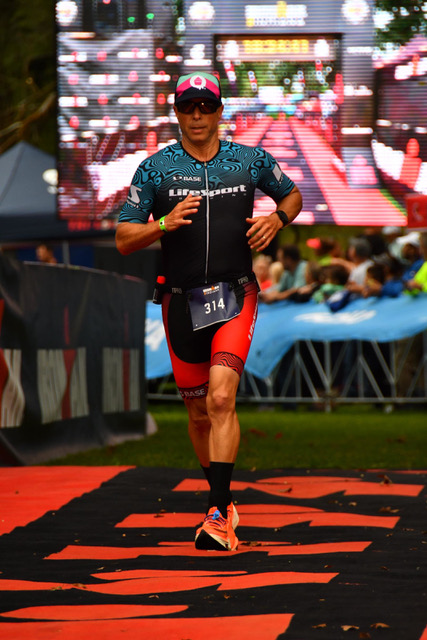
Your big race is approaching. The key training sessions are done. To allow your fitness to shine through on race day, there are still some key considerations to maximize your performance. Consider these seven fine tuning strategies:
1. Lower Training Volume
Lowering training volume will definitely decrease fatigue. For major races, you should decrease training volume for 1-2 weeks prior to the race. In the final 10-14 days before a race, no further training improvements will be made before the event. You can lower volume in your endurance workouts without any fear of compromising performance. If you normally train for 12-15 hours per week, you might decrease training to around 5-7 hours in the week prior to an event.
2. Maintain Some Intensity
Maintain some training intensity leading into the race, but decrease the number of intervals and increase the amount of rest. Race pace efforts will prepare your body and mind for the challenge ahead, keep you loose and keep your body fine tuned.
3. Keep Your Training Schedule
The body is accustomed to specific frequencies of volume and intensity in training. Don’t disrupt your regular training pattern by adding extra workouts, deleting workouts and changing the time of day that certain workouts are performed. If you normally do 2 or 3 early morning swims per week, keep swimming early.
4. Plan Ahead
The extra free time you have before a race can be spent planning your equipment. Take the time to create a checklist of items you will need. Start packing these items and buying supplies (like PowerBars and Gatorade) well before you leave for the event. Get your bike to the shop early, you know what outfit you will race in, how you will carry your nutrition, etc. Don’t fill your rest days with extra tasks and busy work! Recover like a pro and plan some feet up time to stay relaxed and absorb your training. Read a book and watch a few movies.
5. If You Are Traveling…
Travel should be integrated into your training and race plan. Don’t do your biggest day of training prior to a long flight or drive. Take a rest day before and after a long trip that includes very light training. Plan to stay well hydrated (not to excess) and properly nourished when you travel, carrying bottled water and healthy snacks with you on your trip.It’s important to stay mobile when you travel. Take frequent rest stops to stretch or walk around to stay limber.
If possible, try to get your numbers and race package as soon as possible after arrival. You can calm nerves and focus on the race when you have this information.
6. Learn the Course
Pre-drive the race route. Ideally, you will do this at least two days before the actual event – don’t jam up your pre-race day. Take the time to study the terrain and think about your pacing and race strategy. Knowing the course is one of the keys to maximizing your performance in any race. If the race is a major goal for the season, you may wish to plan a scouting trip to the venue prior to the race. You could do this several weeks or even months ahead of the race.
7. Attitude of Gratitude
All the work and preparation are over, and it’s time to get out and enjoy your fitness. Remember how lucky you are to have a health body and to be taking part in the sport you love to do with a group of like-minded people. Decide to enjoy the day.
LifeSport head coach Lance Watson has coached a number of Ironman, Olympic and age-group Champions over the past 30 years. He enjoys coaching athletes of all levels.