LIBRARY
Blog Copy
Sorry, no results were found, search again?
December 5, 2021
Is it better to race with or without technology?
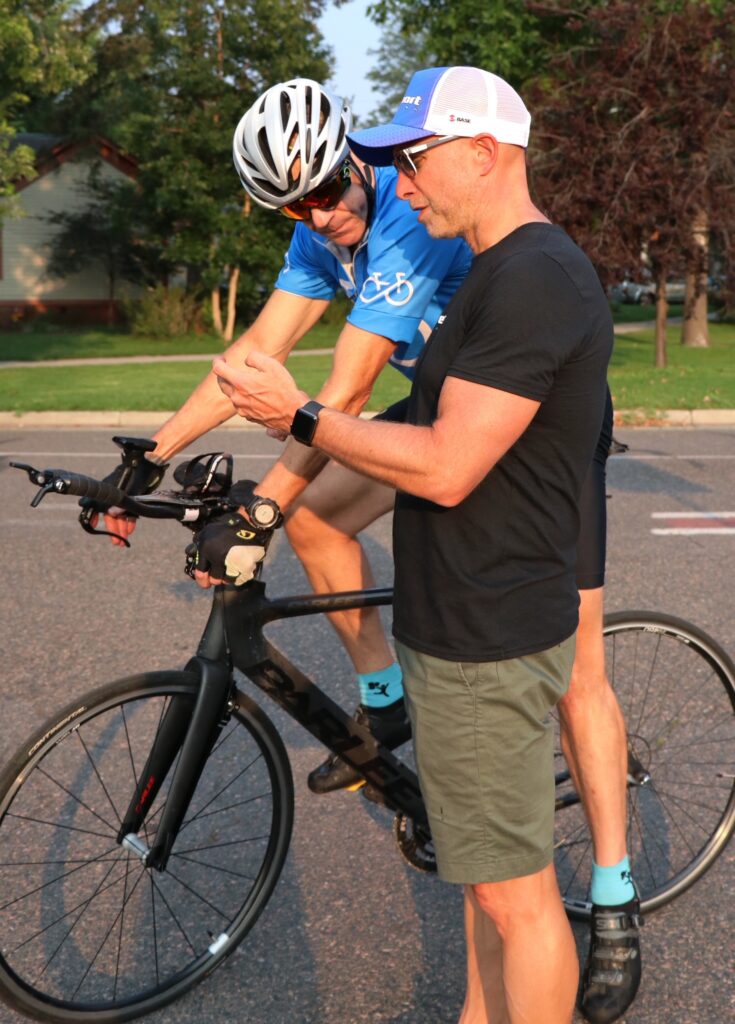
The longer the race, the more important pacing becomes. Assuming you have your nutrition figured out, having a full proof pacing plan for the bike ensures that you will have legs left for the run. Starting the run with a measured effort increases the chances of maintaining pace in the closing stages of the race. In fact, racing with a more even power profile and heart rate, absent of excessive spikes, enhances your ability to consume and process your PowerGels, which results in more available energy and an overall higher performance.
Given all these facts, using technology should be a no-brainer, right?
Before answering “yes”, consider that there have been some incredible historic performances prior to the innovation and proliferation of many of these technologies, tools which we now take for granted.
So how did those athletes do it, back in the day? Quite simply, they raced!
Athletes are not machines. When gauging training with technology you note fluctuations in heart rate versus power output. Some days, for instance, you just can’t get your heart rate up. Another day the power is coming easier. Consider that when Pete Jacobs won Ironman World Championships in Hawaii, at one point on the bike he abandoned his predetermined numbers and just raced, because, as he said, he was “feeling good”.
Numbers can create assumptions and limiters on what we think we are capable. Here’s another example: I have coached athletes in Gran Fondo who have produced higher power output for 2+ hours than they have ever seen for 20 minutes in training. This was because they were focused on staying in their pack, keeping up by reading and reacting to group dynamics. With their attention on the road and other competitors, they basically ignored their technology in the heat of competition.
Athletes have different physiologies. Some athletes have a higher anaerobic capacity, which means they can tolerate more lactic acid (performing above lactic threshold) for a longer period of time and still feel good. This same athlete tends to be able to blow themselves up on the race course, because when they are topped with lactic there is much more to dissipate, coupled with irritated and shredded muscle fibers that have been producing more anaerobic power. Alternately, the high-performing endurance or ultra-endurance athlete can sustain effort at a higher percentage of their lactic threshold, but typically has less anaerobic capacity. These two athletes would have different power targets for long distance racing, or their power zones would be set at different relative percentages of their lactic threshold.
An athlete may not fully discover his/her capabilities over different distances relative to their lactic threshold until they were fully unleashed on race day without limiters. A budding Ironman 70.3 athlete may discover talent for going long, relative to the rest of the field. This may not have been unearthed if the athlete was limited or pre-calibrated by zones or target outputs.
Last, technology assumes there are no dynamics on a race course. Riding behind another competitor well outside the draft zone into a headwind still produces power saving, while passing a string of riders requires an “interval”. That is a common occurrence on flat courses with thousands of athletes. Savvy athletes will surge at opportune times when they sense fatigue in their competitors. Good climbers play their cards on the hills. Experienced riders can relax in heavy cross winds, saving energy over a more tense or timid athlete.
So what do you do? Do you follow your numbers or do you race by feel, strategy and instinct? I would suggest at some point you should cover up your power meter and heart rate monitor, ignore pace and see what you happens when you race purely with your mind and spirit. Engage in the process of technically mastering the course and competing. You might surprise yourself. Assess the numbers after the race, not during. Take what you learn, marry it with what you observe and quantify to create a more holistic race strategy for your next “A” race.
Lance Watson, LifeSport head coach, has trained a number of Ironman, Olympic and age-group Champions over the past 30 years. He enjoys coaching athletes of all levels. Contact Lance to tackle your first IRONMAN or to perform at a higher level.
December 5, 2021
Four healthy tips to boost your immune system
“I travel frequently for work and am a parent to three kids. Do you have any tips on how to keep my immune system strong throughout the year?”
This recent question from one of my athletes is very applicable to all athletes – therefore I wanted to share, and dive further into, my top recommendations on how to maintain a healthy immune system.
No matter the time of year, it is important to ensure that our immune systems are up to the challenge. This especially holds true for endurance athletes as high-volume training puts additional stress on the immune system. Additionally, endurance athletes are much more focused on developing their cardiovascular system which means your immune system isn’t give much thought until you are sick or injured (which is too late!). So does this mean that you should overload on vitamin C and zinc, or completely avoid flying? Definitely not.
I have a few simple rules for keeping the immune system functioning optimally. I find that by keeping it simple my athletes are more successful in the long run. And really – it doesn’t have to be so complicated. These rules seem intuitive but it always amazes me how many athletes will go astray.
Here are my recommendations:
1. Sleep
2. Nutrition
3. Proper training
4. Limit and clear the stress
Sleep is the most important factor in keeping the immune system working optimally. However, it’s often the first thing that is neglected when life gets really busy. The triathletes disciplines should really be “swim, bike, run, sleep” as a lack of sleep can increase stress, undermine metabolism, suppress immunity and set you up for a host of some serious health issues. Endurance athletes tend to lead especially busy lives. For this reason, sleep is vital in boosting the immune system, coping with stress, and repairing the body.
Nutrition is another common sabotage of immune health. People who reach for the quick and easy processed foods are wreaking havoc on their gut health, which in turn will weaken one’s immune system. Beyond fueling your workouts properly – look at fueling your lifestyle properly. Eat regularly timed meals with emphasis on antioxidant rich foods, cook your own meals as much as you can so you can control the source and quality of your ingredients, get in your omega 3 fatty acids, include a variety of fresh vegetables and fruit, and don’t skimp on certain food groups (protein, carbs or healthy fats).
My third recommendation is proper training. This type of training is solid, consistent, and with a purpose. Every workout has a purpose and the flow of a training week has a purpose. I tell my athletes to focus on their consistency and please do not try to make up workouts on their own.
Finally, it is so important to be able to limit the effects of chronic stress. Stress, in itself, is not a bad thing. It’s how we adapt and grow. However, in a chronic form, stress can be overwhelming and send our immune systems into a tailspin.
Developing healthy habits around these four recommendations will help you support and build a strong immune system. You can do it!
Chris Thomas is an Executive LifeSport coach. He has an extensive multi-sport background and is certified from USA Triathlon. He has over fifteen years of coaching experience and is currently ranked as one of the top amateur triathletes in the world.
December 5, 2021
How early should you arrive on race day?
Tina from Tampa, Florida asks: “How early should I arrive at a race?”
I can definitely relate to being nervous about race-day logistics. It’s intimidating. How much time should you leave immediately before a triathlon? Sometimes it’s those crucial beginning minutes that separate athletes from attaining a podium position at a race or not. In my opinion it is always better to be at a race earlier rather than later. You want to become familiar with the course and reconnoiter it at a comfortable pace. For example, if you are coming from out of town – arriving no later than the Wednesday before a Saturday race, or the Thursday before a Sunday race should give you lots of time to become familiar with the race venue.
There is a lot to do and consider in order to have your best race: planning your travel logistics and accommodation details, packing everything you need for the trip and race day, picking up your race package, doing your last pre-race workouts, getting your bike setup and gears tested, organizing your nutrition, hydration and electrolyte needs, and so on. It is easy for some items to slip the mind – but don’t panic! Normally triathlon events will have multi-sports stores present around the race expo selling items you may have forgotten.
Arriving early also allows you to source out grocery stores, triathlon stores (or running and cycling stores) and restaurants. Although don’t forget to pack certain food items if you are unsure about whether you will be able to find them where you are staying. The rule of thumb is to do what you always do at home, and change as little as possible while on the road. For example, I always bring bottled waters, bananas, a stash of snack items I eat at home, a zip lock of granola, and even instant coffee in case I can’t rely on the place I’m at.
If at all possible, you should review the swim, bike and run courses so that you can be prepared and you can segment the course. It is also good to go into and out of transition from a few different directions so that you can ensure you know where your bike is and how you enter and exit the area during the race. In addition, sometimes knowing where on the course the port-a-potties are can be invaluable…!
My best advice is to STICK TO YOUR ROUTINE. Follow whatever your specific training and preparation tells you to do. Arriving early can do a lot to reducing pre-race stress, you can attend athlete meetings, find landmarks to site on for the swim, know where to park race morning and just have a good feel for the venue. Arriving early also gives you the upper hand in dealing with things you didn’t expect. Maybe the water is colder? Maybe something happened to your bike during travel? Maybe your swim suit ripped? Things happen to everyone and its simply part of triathlon. Remain calm and have the confidence that you have allowed yourself enough time to confidently overcome all those hurdles putting you in the best position for success on race day.
Now go forth! And have fun!
Based in Vancouver, BC, Mark Shorter is a Premier level coach at LifeSport Coachnig which is ideal for athletes of all levels who like an interactive coaching relationships with specific attention to their life and training requirements. Mark is an NCCP certified triathlon coach who has completed over 90 marathons as well as over 40 Ironman races, winning National Age Group Championships along the way.