








LIBRARY
Blog Copy
February 6, 2026
Neuroplasticity: The Triathlete’s Secret Weapon

When you think about training for a triathlon, your muscles, lungs, and heart probably come to mind first. But what if the real limiter isn’t physical at all? What if it’s your brain?
Here’s the truth: Your nervous system is constantly learning from your workouts, and with intentional practice, you can train your brain just like you train your body.
What Is Neuroplasticity?
Neuroplasticity is your brain’s ability to reorganize itself—forming new neural connections in response to repeated experiences. In simple terms, your brain adapts to whatever you repeatedly practice. This adaptability happens across all ages and impacts your behavior.
For triathletes, each swim, bike, run is an opportunity to train the brain to remain focused under sustained challenging efforts and fatigue.
Experienced athletes rarely “lose it” when it hurts because they’ve trained their brains to expect discomfort and respond with calm confidence rather than panic.
Why Your Brain Thinks Discomfort Is Dangerous
Your brain has a built-in safety system; its default interpretation of hard effort is “danger.” When you hit a steep climb or a fast interval, that same system lights up as if you were about to face a physical threat.
But here’s the good news: Neuroplasticity lets you change that response.
Every time you maintain composure during discomfort—whether it’s open water chaos, brutal intervals, or long bricks—you strengthen a new internal message: “This is hard, but I’m safe.”
This repeated experience teaches your brain that pain doesn’t equal emergency, and over time, that fear shrinks. Confidence comes from familiarity, and calm comes from experience — your nervous system recognizes a situation it’s already handled.
Training Your Brain for Race Day
Race day brings intensity, noise, nerves, and unpredictability. If your brain encounters stimuli for the first time on race day, it will default to a stress-response, because it hasn’t built familiarity with the situation. Unfamiliarity = anxiety.
But when your training includes controlled exposure to race-like scenarios—such as:
- Practicing race-pace swim starts,
- Simulating crowded swim conditions,
- Pushing bricks at race intensity
Your stop panicking and instead your brain starts saying: “Yep… been there, done that.” The sensations that were once “stressful” become signals to focus.
A Simple Daily Practice
Here’s a small but powerful way to reinforce this positive rewiring: End every session by naming one win. For example, at the end of a workout, ask:
- What did I handle better than before?
- Where did I stay calm instead of reactive?
- What decision did I execute well?
By doing this, you reinforce a pattern of calm, capable responses instead of survival reactions. Over weeks and months, this consistent reinforcement turns into a habitual way of responding to training stress—both physically and mentally.
What This Means for You
- Your brain isn’t fixed—it’s trainable.
- Every workout sends signals to your nervous system about what is normal, safe, and familiar.
- By intentionally shifting your mental framing of ‘discomfort’, you build a brain that responds with calm confidence, not alarm.
Training your brain is as crucial as training your body—especially if you want to perform your best when it matters most.
References
- American Psychological Association — Neuroplasticity: The Brain’s Ability to Change (APA.org)

For many triathletes, race day brings a mix of excitement and nerves. One of the most overlooked aspects of preparation is getting comfortable in a wetsuit before the first open water race. If you’ve never swum in your wetsuit before race day, you could face unexpected challenges that impact your performance and confidence. But what if you don’t have access to open water due to logistics, time of year, or water temperature? Practicing in a pool is a great alternative.
Why you need to train in your wetsuit before race day
1. Adjusting to buoyancy and body position
Wetsuits provide buoyancy, which changes your body position in the water. While this buoyancy can be beneficial, it may also alter your stroke mechanics and kick. Getting familiar with this change ensures a smoother transition on race day.
2. Getting comfortable with shoulder (im-)mobility
Many triathletes find that wetsuits feel restrictive, particularly around the shoulders. Without prior practice, this restriction can lead to early fatigue and inefficient strokes. Practicing beforehand allows you to adjust to the reduced mobility and adapt your stroke.
3. Acclimating to compression and fit
A wetsuit fits snugly, which can sometimes feel constricting, especially around the chest. For athletes prone to anxiety or feeling short of breath, this sensation can be unnerving. Spending time in your wetsuit before race day helps you get used to this pressure and prevents unnecessary stress.
4. Testing and perfecting your suit’s fit
Wetsuits need to be properly fitted to function optimally. Wearing your suit in a controlled setting allows you to make necessary adjustments, such as ensuring the suit is pulled up properly, checking for chafing points, and fine-tuning your comfort level.
5. Practicing transition (T1)
Struggling to remove your wetsuit during transition can cost you valuable seconds. Practicing putting it on and taking it off will make the process smoother and faster during the race.
How to train in a wetsuit without open water access
If you don’t have access to open water, a pool can be a great substitute. Here’s how to integrate wetsuit practice into your training:
1. Plan short wetsuit sessions
Most pools have temperature regulations that may make wearing a wetsuit uncomfortable for long periods. Plan shorter sessions of 15-30 minutes to avoid overheating.
2. Use a cooler pool (if available)
If you have access to a pool with cooler water – such as an outdoor lap pool or “competition” pool – that’s ideal for wetsuit practice. This will more closely mimic the race environment.
3. Focus on technique and adjustments
During your wetsuit swims, pay attention to your body position, breathing, and any mobility restrictions. Make small adjustments to your stroke and kick as needed.
4. Simulate race conditions
Try doing a few sprint starts in the wetsuit to simulate the excitement of race day. You can also practice sighting, which is crucial in open water swimming.
5. Practice wetsuit removal
After your swim, time yourself removing your wetsuit. Work on getting the top half off quickly as you exit the pool, just like you would during a race.
Final thoughts
Swimming in a wetsuit before your first open water race is crucial for performance and confidence. Even if open water isn’t an option, a pool provides an excellent environment for wetsuit acclimation. By practicing buoyancy adjustments, mobility, and transitions ahead of time, you’ll set yourself up for a smoother and more successful race day experience.
So, don’t wait until race day—get into your wetsuit early and often to ensure you’re fully prepared!
March 5, 2025
Why supershoes? What’s best for you?
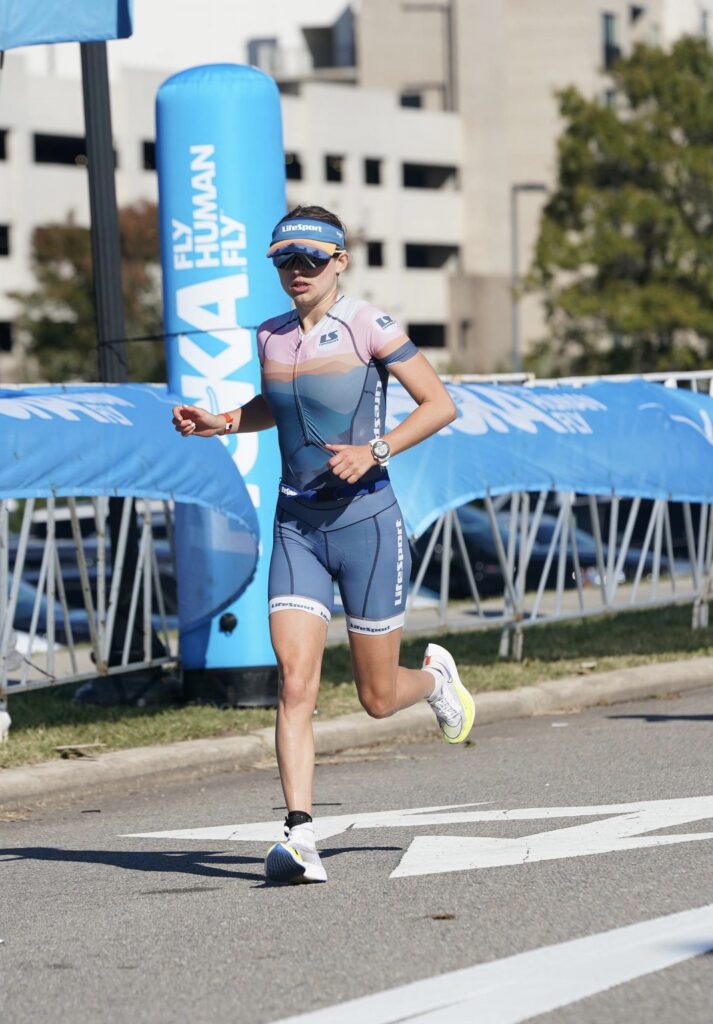
by Head Coach, Lance Watson
How to Choose the Best Supershoes for Triathlon: Sprint to Ironman
Triathletes are always looking for ways to gain an edge, and supershoes have revolutionized racing, offering increased efficiency, better energy return, and reduced muscle fatigue. However, choosing the right pair depends on the race distance, biomechanics, and individual preferences. Whether you’re racing short-course events (Sprint and Olympic) or long-distance triathlons (Ironman 70.3 and Ironman), the ideal supershoe should match your needs for comfort, durability, and performance. Here’s how to make the best choice.
Understanding Supershoe Technology
Modern supershoes utilize carbon fiber plates, lightweight foams, and rocker geometry to improve running economy. These features reduce fatigue and enhance propulsion, making them especially beneficial for triathletes transitioning from cycling to running. However, not all supershoes perform the same across different race distances.
Choosing Supershoes for Short-Distance Triathlons (Sprint & Olympic)
In Sprint and Olympic-distance triathlons, the run leg is shorter (5K and 10K, respectively), requiring shoes that prioritize speed, responsiveness, and rapid transitions.
- Weight Matters: Lighter shoes with a responsive feel can help maximize turnover and speed. Look for models with minimal weight but ample cushioning to maintain efficiency.
- Aggressive Rocker and Responsiveness: A strong forefoot rocker and firm foam can enhance toe-off, which is crucial for short, fast efforts.
- Secure Fit: Shoes with a snug upper and a stable platform reduce foot movement and improve efficiency. Elastic laces or a quick-entry system can also speed up T2 transitions.
- Examples: Nike Vaporfly, Adidas Adizero Adios Pro, and ASICS Metaspeed Sky+ provide a fast, lightweight option for short-course athletes.
Choosing Supershoes for Long-Distance Triathlons (Ironman 70.3 & Ironman)
For half and full Ironman events, durability, comfort, and energy conservation are key, as the marathon distance (or half-marathon) puts significant strain on the legs.
- Max Cushioning for Fatigue Resistance: Look for high-stack foam that provides long-lasting comfort and absorbs impact over extended distances.
- Stability for Fatigue Management: As fatigue sets in, maintaining form becomes difficult. Supershoes with a stable base and slight guidance features help prevent overpronation and maintain efficiency.
- Breathability and Comfort: A well-ventilated upper prevents overheating, while a comfortable fit minimizes blisters over the long haul.
- Examples: Nike Alphafly, Saucony Endorphin Elite, and HOKA Rocket X 2 offer excellent cushioning and energy return for long-distance events.
Additional Considerations for Triathletes
- Transition Ease: Elastic laces or a design that allows for sockless wear can improve T2 efficiency.
- Durability vs. Performance: While some supershoes offer top-tier speed, they may not last beyond a few races. Consider durability if training in them.
- Personal Biomechanics: Not every supershoe suits every runner. Testing different models in training can help identify the best fit.
- Try Before Race Day: Always test your chosen supershoe in training under race-pace conditions to ensure comfort and efficiency.
- Consider Race Course Conditions: Wet conditions, hilly terrain, or mixed surfaces may influence your shoe choice, so select a model with appropriate grip and stability.
Conclusion
Choosing the right supershoes depends on your race distance, comfort preferences, and biomechanics. Short-course triathletes benefit from lightweight, aggressive shoes for speed, while long-distance athletes need cushioning and stability for endurance. By selecting the right pair and testing them in training, you can maximize efficiency, reduce fatigue, and finish strong on race day.
LifeSport head coach Lance Watson has coached a number of Ironman, Olympic and age-group Champions over the past 30 years. He enjoys coaching athletes of all levels. Join Lance to tackle your first triathlon or perform at a higher level.