LIBRARY
Blog Copy
Sorry, no results were found, search again?
November 16, 2021
Winter pool swimming for faster summer open water swimming
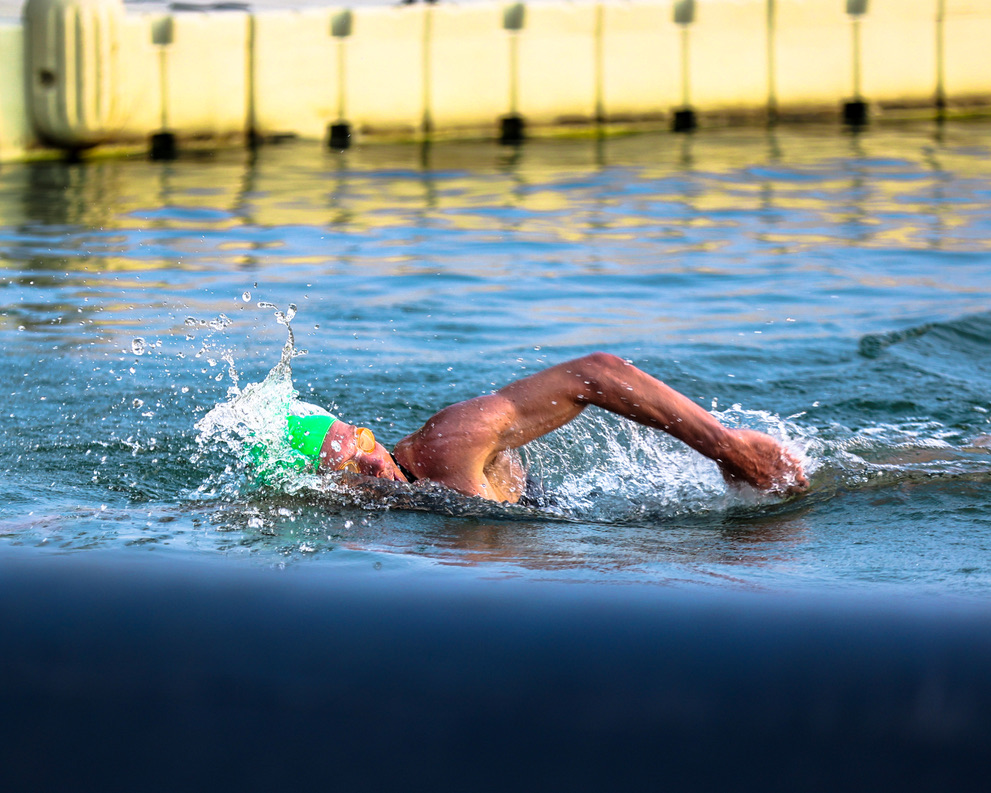
The swim in a triathlon can feel like a washing machine of arms and legs with you trapped in the middle. Open water swimming is an activity that most people have anxiety about at some point in their triathlon career. Yet, amazingly, many triathletes have their only pack swimming experience on race day!
The fall and winter is a great time to set the ground work for comfort and improved skills in open water. Whether it’s the pros trying to figure out how to get on the fastest feet possible, or tri-newbies trying to keep their heads above water, here are a few ideas to help you get the most out of your open water swim.
Many of us spend most, if not all of our time, swimming in a pool, and have little chance to train in a lake, ocean, or pond. A pool is ideal for keeping track of split times, pacing, and mileage. However, sometimes the “super-speed” you feel in the pool doesn’t seem to transfer to race day. Your main rival who swims in your wake during workouts can lead you out of the water by minutes in a race!
The pool is a great place to start sharpening those open water specific skills. Sighting, or looking up to see buoys, is the most obvious skill of all. Since lifting the head and trying to quickly focus on a landmark ahead takes a little bit of time and disrupts your normal stroke it is a good idea to practice this and make it as familiar as the rest of your stroke. Sighting is also a bit more strenuous. You may find that your neck or shoulders feel a little bit tighter after the workout but regular practise will eliminate this. As you begin taking a breath to the side, turn the head forward as you inhale and catch a glimpse of the landscape ahead. This should be a smooth, continuous motion, and if you don’t have a chance to get a clear view, don’t prolong that stroke. Instead wait till a stroke or two later and then sight again. This time knowing which direction to look will allow you to focus your eyes and pick out the details you may have missed the first time. This is also where bilateral breathing (breathing to both sides) is advantageous since it will allow you to have a slightly better awareness of your surroundings, and allow you to breathe away from blinding sunlight or waves.
The frequency of sighting depends on the course, and whether you are following an experienced swimmer’s feet. In a pool, it is easy to focus on a point, such as a starting block, or a sign. During a main set, warm up, or warm down, alternate a length of sighting every 3rd or 5th stroke with a length of regular swimming and you will notice how this may change the rhythm of the stroke slightly. This can be done for 200-400 meters, a couple of times a week at first. It is not a difficult skill, and once you feel comfortable with it, include it in a workout once per week. You can also time your intervals with and without sighting, so you can start to quantify how close your freestyle with sighting is to the pace times of your freestyle swimming without sighting. In an open water race nobody has unobstructed, clear vision, so don’t panic if you feel a bit more blind than in a pool.
Drafting, or swimming on people’s feet comes very easily to some. Others have trouble judging how close to be, fall off, or zig-zag, and then find they are swimming alone. Here is a drill you can practise in a pool. With a couple of friends, swim in an eschlon in the same manner as when you bike. In a 50m pool the lead person pushes off, followed 1 second later by the next person, and another 1 second later the third person departs. There should be no gap between the swimmers. It should be feet, hands, feet, and hands. The lead person sprints a length, at the end of which they move off to the side and wait for number 2 and 3 to turn and continue swimming. The first person then joins on to the end of the group. You may be surprised at how a slower swimmer can keep up to a much faster swimmer this way. If you are leading, swim well and practise being smooth even if someone is touching your toes. Further progressions could be swimming 3 or 5 abreast for medium to fast single lengths of a pool. Try and swim a calm, quick stroke in close proximity to others.
Pacing and starts in triathlons differ quite a bit from pool swimming and racing. In swim clubs you are taught to go out conservatively during a 1500, and even split it. In a tri however there are no lane ropes, no personal space, and getting boxed in by slower swimmers can leave you far behind your goal or missing your optimal draft pack. The Olympic distance 1500m or 70.3 1900m usually works out as a mad frenzy of speed for the first 200 meters, and then settles into a more manageable pace while trying to recover from the lactic-producing start. The pace remains fairly solid until the finish when you may need to pick up the pace again to get into transition just ahead of the swarm of people swimming around you. It is a double-edged sword. With a fast start there is the chance of getting overexcited and building up too much lactic acid, but a conservative start may mean having to swim through people the rest of the way instead of having clear water. Incorporate pacing strategies into your swim workouts. Don’t just even split sets, also work on sprinting 100’s followed immediately by solid 200’s or 300’s. Think of the 1500 as RP+ (Race Pace +) start for 100-200m; a MRP (Mid Race Pace) section that is just slightly slower than your 1500 pool time trial pace; and a solid RP+ building finish to the swim over the final 200-300m. This simple way of breaking it up can help put you in a better position and make the swim not only faster but also more enjoyable since there will be fewer people to swim over later.
Having internal cues to focus on like your breathing rate and arm turnover come in handy when you don’t have walls and lane ropes and pace clocks to keep you focused. Are you breathing more than normal? Can you spin your arms a little faster? Don’t forget to remind yourself to speed up the turnover, or increase the kick, when fighting for position or trying to navigate to the next buoy. Make it a part of an automatic checklist in your head. When training in the pool, during those long sets, what do you think about? Singing songs, thinking about the next workout, or making a mental shopping list are all common (but not necessarily high performance!) thoughts. At least some of the time everyone has cue words or ideas that cross their mind. It could be simply repeating left-arm-right-arm, or focusing on the pull at the bottom of the stroke, or feeling the downward part of the kick. These cues give your stroke rhythm and make you feel fast. You need to tap into them in the lake as much as in the pool. On race day this is harder than it seems. During a rough swim it is easy to loose self-awareness and get frustrated with people pushing and jostling. This can be a huge energy drain. Anger, frustration, or wasting energy planning how to get back at the person who just whacked you in the head leaves little time to devote to your pace and stroke cues. It is necessary to stay aggressive and respond to the group around you, but not at the expense of forgetting you are swimming.
Common anxieties for beginning triathletes often include managing through large groups and the lack of a bottom to touch. You can probably swim endlessly in a pool, so the skills and endurance are there. The close proximity to others can be a bit overwhelming, but easy to overcome. In a pool or a lake, get together with a small group (2-5) and purposely swim in each other’s way. It is a playtime workout. Take 5-10 minutes and just swim over top of each other, speed up, slow down, or block the other person’s arm while they are trying to take a stroke. Test what it takes to disrupt a person. With friends and in a fun atmosphere it won’t be intimidating.
Open water swimming can be an awesome experience if you let it. The fact that it is not an exact science and can be less predictable than a 1500m-pool swim is something that one can use to their advantage. The small subtleties of open water swimming versus pool swimming make it a skill in itself. It is another great way to remind us that we are multi-sport and multi-talented athletes.
Lance Watson, LifeSport head coach, has trained a number of Ironman, Olympic and age-group Champions over the past 30 years. He enjoys coaching athletes of all levels.
November 16, 2021
10 Do’s for your triathlon off-season
Over the years, I have often had to put my foot down in order to slow my athletes during the off season. Surprisingly, that period of rest and regeneration caused me more worries in terms of managing my athletes than the specific preparation for major events such as the World Championships. This led me to develop a few key pointers for my athletes. Here are my best do’s for every triathlete’s off season:
- 1 – DO take enough time off training: athletes are guilt-ridden. They are usually willing to take three to four weeks off training as long as they can swim 3 x week, bike 2 x a week and run 4 x week… because fall is sooooo nice. Well, this is not an off season. Your body needs to regenerate as does you mind. Taking real time off will allow your body and soul to reach a new level in the upcoming year.
- 2 – DO stay active: Yes… I said that you need to allow your body to regenerate but you should still go out and have fun playing outside. Your body secreted endorphins at an industrial rate for most of the year. It still needs a small dose of it, even in the off season. 3- 4 sessions of unstructured training will do the trick.
- 3 – DO stay away from any log or training device. It seems redundant, but the sessions mentioned in my #2, shouldn’t be downloaded and analyzed on TrainingPeaks…they are meant to keep a sane balance between rest and training.
- 4 – DO spend quality time with your friends and family. They are your supporters for most of the year, enduring you early bed times on Fridays and Saturdays. Take advantage of those extra social hours while it lasts.
- 5 – DO allow yourself to take a few pounds. You can’t be race fit all year round. You physically and mentally need to put some weight on at some point.
- 6 – DO take some time to reflect on your successes and failures of the past season. However, let the dust settle. Athletes tend to analyze their season way too soon. After two or three weeks, you can start to write down the things that worked well, the aspects you improved, the skills that you acquired as well as your failures. It will serve as a baseline for your goal setting meeting with your coach.
- 7 – DO sit down with your coach to assess your past season. Athletes are often too hard on themselves and tend to see their glass half empty instead of half full. Your coach is there to bring an objective look at your results and your processes. Once it’s done, you should jump right into #8.
- 8 – DO set new goals with your coach. They can be process goals, tactical skills, technical competencies, psychological race preparation, etc. Determining and prioritizing them will help you reach you full athletic potential.
- 9 – DO monitor your motivation. Your motivation should increase as the season approaches… not the opposite. If you train (focus) too much in November, December and January, you might lack motivation during race season. Be smart, pace your motivation in order to peak mentally at the right moment.
- 10 – DO enjoy your off season knowing that it is a key component of your future successes!
Philippe Bertrand is a senior LifeSport coach who has worked with athletes of all experiences from professionals to age-groupers. He was Canada’s Elite National Team Head Coach in 2009 and 2010, and coach for the 2008 Olympic Games in Beijing. Philippe founded Tri-O-Lacs in 2001, the biggest triathlon club in Quebec. With this club he came up with a long-term development philosophy that enabled him to put numerous athletes on the provincial elite team and helped dozens of age-group athletes achieve their personal goals.
November 16, 2021
Triathlon: Do you live and die by it?
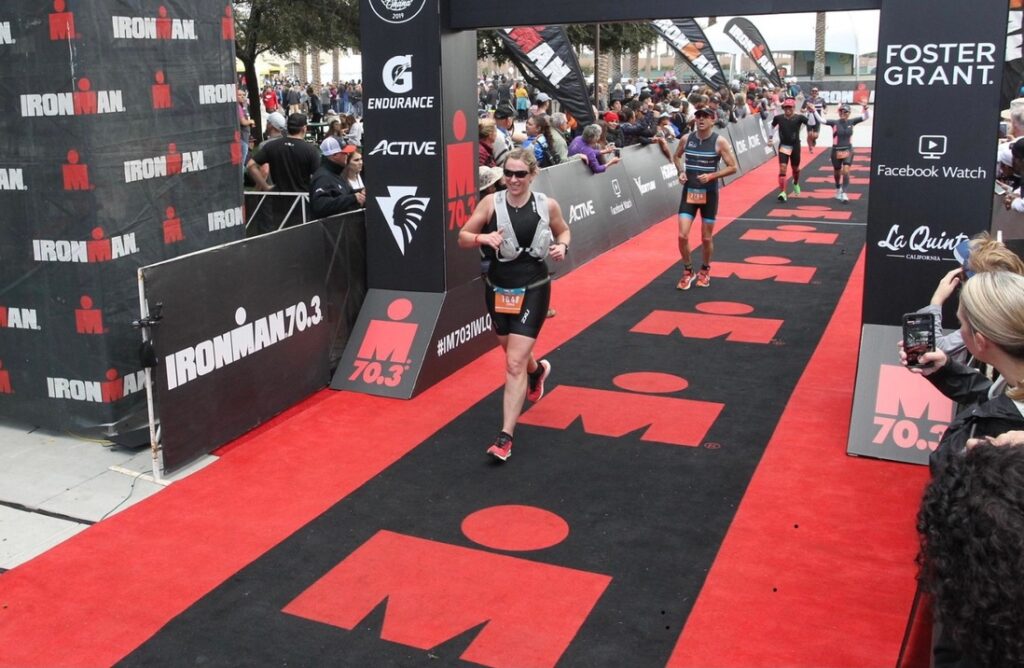
Many athletes live and die by their triathlon racing and training. Are you one of those athletes? Do you believe that your self-image is tied to your performances in racing, training and workouts, your body composition, what kind of equipment you have, the number of Ironman tattoos?
Consider the type of personalities that consider to “tri” the lifestyle commitment it takes to train for triathlon, especially for Ironman distance. It takes huge commitment. Most people “think” we are crazy or Type A+ personalities. One requires dedicating a huge amount of time into training, an extremely regimented diet, early mornings to the pool, limited social life, and not to mention at times dealing with a roller coaster of emotions. It can take a toll, year after year.
You don’t necessarily need to be a consumed tri geek to be a great triathlete. In fact, some of the greatest triathletes I have coached have balance in their lives. I note that as they mature with age from their 20′ to their 30’s, their performance improves. You can have relationships, family, and a social life, eat junk once in a while and skip the occasional workout without becoming obsessive and still have great results.
Alternately, once you get hooked into extremely high expectations, and base “who you are” and “what you stand for” completely on the outcome of a sporting event, triathlon quickly stops being fun. If it isn’t fun you have to question yourself why you do it?
I challenge you to sit down and write down 10 reasons why you do the sport and what would happen if you were not able to continue? Would your life fall apart? What is the big picture?
Most people have their personal reasons for being a triathlete. For some it is social, for others it’s enjoying solo time alone. Another reason could be for weight control, to be able to fit in their favorite jeans. For others it might be purely for feeling fit & healthy regardless of body composition. Some may chose the sport because they solely love competition against others and for some it’s a race against themselves. Triathlon may provide an opportunity to travel to destinations they may not have had the chance otherwise or to simply be happy at home and race locally with friends.
The end point is that when your sport or hobby becomes your life, it can be a dangerous obsession. Even at the Pro level where performance in a race means a pay check, you can never count on anything for sure. You can be the fittest, fastest, and leanest and have the best, most expensive equipment and when it comes to the day of the race, things go terribly wrong. Then what? Is all that time training wasted, money spent gone, you feel like you suck and everyone is going to talk about you behind your back? The reality of the situation is that most people truly do not care and are not going to judge you whether you win or lose the race, PB, get a Kona slot or look like a super model on the cover of Triathlete swim suit issue.
What is most important is ones attitude going into, and during competition. When you relax and shift your focus to being excited to race, treating your other teammates and Iron mates with respect and thankfulness, cherishing each moment, being prepared for unexpected occurrences and having a general plan on how to deal with them, your enjoyment in triathlon competition will be that much more enjoyable.
The big picture to keep in mind is that we are so lucky to be able to train and race at the level we do. I think, as athletes, we take a lot for granted and sweat the small stuff. Yes, racing can be stressful; traveling can turn into a nightmare of lost luggage or missed flights. Stuff happens. It’s just being aware and taking control of what’s controllable and letting the rest go. As Mike Reilly, the voice of Ironman, said at the start of Ironman Hawaii, “The only thing you can change at this moment is your ATTITUDE”. This was as competitors looked out to the ocean with large swells and unusually windy conditions on the bike that day. Thing was, everyone had to deal with those conditions and the people that didn’t let them affect them had a successful experience.
As you journey through this season, from practice to practice and race to race, ask yourself, “Do I live and die by this?” Consider if that is the experience of sport you signed up for in the first place. If not, take positive action to affect some change.
Lance Watson, LifeSport head coach, has trained a number of Ironman, Olympic and age-group Champions over the past 30 years. He enjoys coaching athletes of all levels.