LIBRARY
Blog Copy
Sorry, no results were found, search again?
November 22, 2021
Racing in Hot Weather: How to Beat the Heat in an Ironman
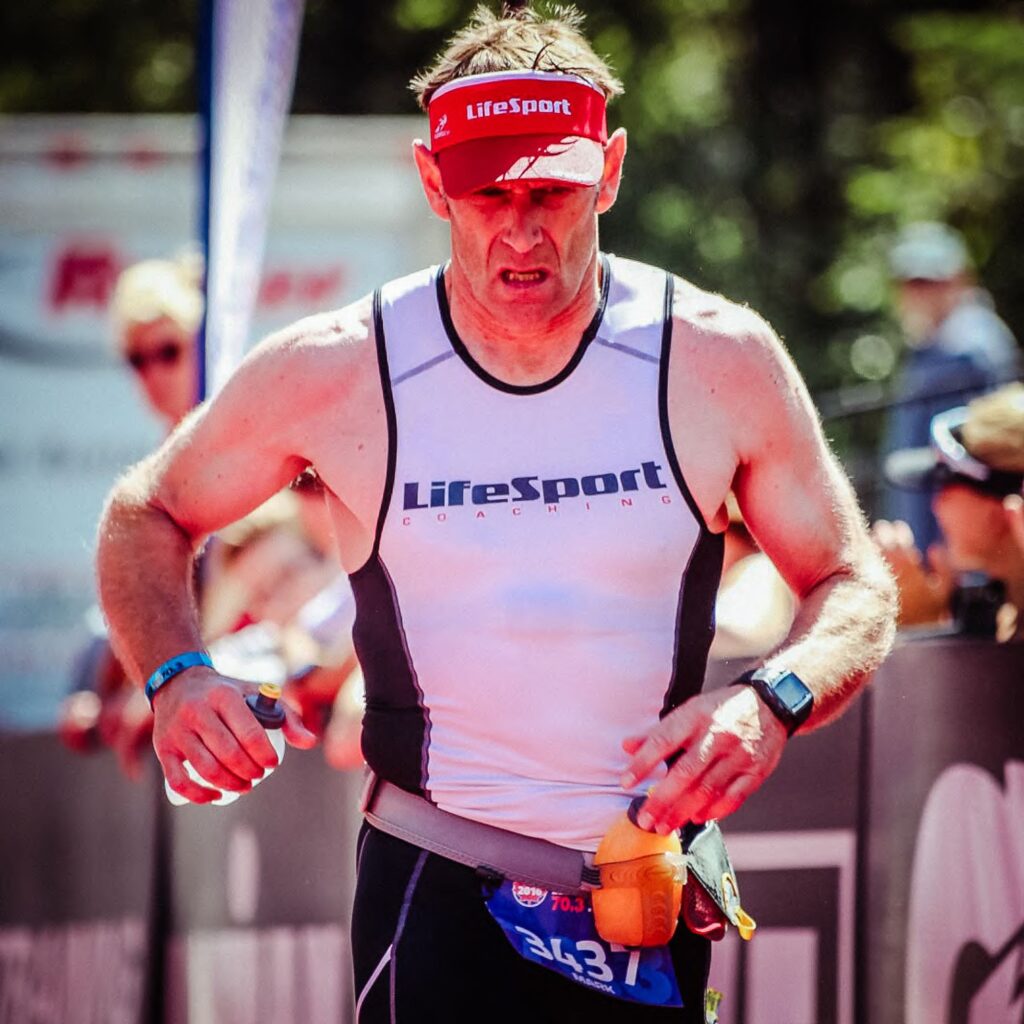
Summer is here and race courses are heating up. While the obvious challenges of Ironman are the distances and difficulty of the swim, bike and run, one major barrier to summertime success can be heat and humidity. This builds as your race day progresses. Poor heat acclimation and hydration strategies can ruin even the best training preparation.
Your Heat Pre-Acclimation Plan
You can actually train your body to be able to ingest fluid more efficiently. A good goal is one liter per hour (1L = 33oz). That is two small bike bottles per hour. Drinking should be done regularly and systematically; if you forget and then “guzzle” to get the fluids in, it is more difficult to ingest. Hydration keeps blood plasma volume levels up, which is necessary for oxygen delivery to muscles and sweating.
Acclimation also reduces salt loss in sweat. On average, individuals that are heat acclimatized lower their rate of salt loss (~ 500 mg/L of sweat loss) versus non-heat acclimatized individuals (~ 2500mg/L sweat loss). In really hot conditions and at high sweat rates more salt will be lost. This too is highly individual and varies a lot. 500-1000 mg sodium/liter of water is a good target, so you may need to add salt to your electrolyte drinks. 1/4 tsp of salt (sodium chloride) has 590 mg of sodium. If you use salt tabs, check sodium levels, which can vary between 50mg and 350mg per capsule.
The good news is you can pre-acclimate before your race. Performing workouts in heat will train the body to function more efficiently on race day. The benefits of heat training include a reduction in resting body temperature and an enhanced sweat response that spares valuable muscle carbohydrate during exercise. This strategy must be implemented well out from any competition to ensure athlete safety and optimize performance without interfering with tapers. Acclimatization maintenance programs will allow athletes to hold-on to heat adaptation for several months.
Protocol:
- Room temperature should be 35-40 °C (95-104 °F)
- Heat can be artificial (ride trainer in bathroom with portable heater) or natural and exercise is used to elevate body temperature
- 5-10 consecutive days of continuous exercise in the heat with a sustained elevation in core temperature to approximately 38.5 °C (101.3 °F) for 60-90 minutes. Monitoring heart rate is a viable alternative to core temperature.
- Go hard for 20 minutes early in the session (sustained heart rate of 80% of maximum) and then back workload off for remainder of session. Even though you back off on work, heart rate will stay elevated because of the demand for blood at both the muscles and the skin (to stay cool).
- As you adapt to the heat you will have to work harder to elevate body core temperature and heart rate
- Dry heat is better than humid conditions because both sweat glands and Central Nervous System adapt.
Have a Fluid and Fuel Plan
Given that body fluids such as blood are comprised mostly of water and electrolytes, and that muscle is approximately 77% water, a loss of only 2-3% of body weight through sweating may compromise endurance performance. Research suggests that many triathletes are dehydrating by this amount over the course of an Olympic distance triathlon and dehydration will be greater in longer events.
It is important to consider the influence of the consecutive activities of swimming, cycling or running on sweat loss. The combination of cool water keeping skin temperature around 27°C (80.6 °F), and the fact that it takes about 30 minutes to turn sweating completely on (influenced by both deep body core temperature and skin temperature) minimizes sweat rate and fluid loss during the swim. A hot environment with high solar radiation and choppy conditions will dictate slightly higher sweat losses. The transition to cycling creates a rapid increase in skin temperature and substantial increases in deep body temperature causing sweat rate and rates of dehydration to increase as the triathlon progresses. Data would suggest that at least half of total triathlon fluid loss is occurring during the run, because of reduced convective air cooling and a large active muscle mass. Thus the strain experienced by the body as a triathlon progresses accumulates and a major contributor to this strain is hypohydration. The take home message here: hydrate in all stages of the triathlon!
This makes intuitive sense but when triathletes are left to drink voluntarily during training or racing that they normally drink only about 50% of the fluid required to maintain fluid balance, especially during the run. In the interests of performance and safety triathletes need to know how much sweat loss they are experiencing in both training and competition and to formulate a hydration plan. Additionally, carbohydrate use and sodium loss are increased in a hot environment, and these factors must be addressed in any fluid replacement strategy. Carbohydrate concentrations should be limited to 6-8% and at maximum 60 g of carbohydrates can be used each hour (1 g/minute). At higher concentrations stomach emptying rates may be impaired. Below are some guidelines to help in formulating this hydration plan.
- Individualize Hydration Rates
- Record your sweat loss over different workouts (and races if possible). Weigh yourself before and after training (nude body weights are most accurate) and account for any fluid consumed (1 liter = 1 kilogram).
- Example: If you lost 0.5kg in 1 hour, even though you drank 500 ml of fluid (=0.5kg), then your sweat rate would be approximately 1 liter per hour. 0.5L +0.5L = 1.0L in 1 hour. This is what you should aim to replace. Note that it is impossible to replace fluid at a greater rate than 1 L/hour, as the stomach cannot empty any faster than that!
- Hydration Before Exercise
- Ensure you are well hydrated by drinking carbohydrate drinks and/or water in the hours leading up to your event (~250-750ml 2-3 hrs before exercise)
- Drink 250-500 ml of water 30-60 min before exercise (avoid carbohydrate in the hour before competition).
- Consume fluid (250 -500ml) right before your event to fill the stomach.
- Hydration During Exercise
- Match fluid intake with sweat loss as closely as possible (through information gathered from pre and post-exercise weighing).
- Practice drinking during training and aim to keep dehydration about 1% of body weight, or replace about 80% of sweat loss. It may take some practice to train your stomach to handle volume while exercising.
- As a general guide ingest 200-250 ml of 6-8% carbohydrate drink every 15-20 minutes (up to~60g carbohydrate/hr). In very hot conditions diluting a carbohydrate drink may enhance fluid absorption. Some sodium in the beverage will be beneficial as well: you can add a small amount of salt into your beverage (1/8 teaspoon/waterbottle) if it does not have any sodium in it.
- Drink cold fluids that you know you like and that have worked for you.
- Hydration After Exercise (important for training and racing)
- Replace both fluid and carbohydrate and sodium. Extra sodium post exercise through food or through a beverage source helps retain fluid in the body. Salting food pre-racing may also help guard against sodium deficits that accumulate over the course of a workout. Below is a list of some foods containing varying amounts of sodium.
| Food or Beverage | Serving Size | Sodium (mg) |
| Chicken Noodle Soup | 1 cup (250 ml) | 1107 |
| Baked Beans | 1 cup (250 ml) | 1008 |
| Dill Pickle (Medium) | 1 | 928 |
| Salted Pretzels | 1 ounce | 483 |
| Tomato Juice | 1 cup (250 ml) | 882 |
| Gatorade | 1 cup (250 ml) | 110 |
| Water | 1 cup (250 ml) | 7 |
- Carbohydrates are replaced most rapidly in the first 2 hours after exercise.
- Fluid loss continues after exercise stops so athletes need to consume more fluid than the fluid deficit. For example, consume 3L in 4 hours to achieve replacement of 2 L.
- A simple way of checking hydration status is to monitor urine output. It should be clear or pale yellow and produced in sufficient volume.
Travel and Race Week Prep
What you do or don’t do during the days leading into Ironman, or any hot race, can have a profound impact upon your performance. To fully acclimate to an extreme change in climate you will have to arrive about 10 days prior to the event. While this may not be feasible nor practical for some, arriving at least five days beforehand will allow your body to semi-adapt to the temperature and humidity and you will be far better off than flying in the day before. Once there it may be tempting to jump out and get training in the heat of the day in hopes of speeding acclimation but you will need to ease your body into this change to minimize stress. Don’t blow your taper! For the first couple days get up early for your taper sessions, before the heat hits. Minimize your time spent in the direct sun for the remainder of the day but be sure to still spend short periods of time outside to aid your body’s adjustment. After these first couple days try to do a few sessions at the hottest time of the day. The key here is not to overdo heat exposure this close to the race. For example, if you have a 30 minute run with some pick-ups, be outside for only 30 minutes and refuel/rehydrate immediately afterwards. When not outside, avoid air conditioning the best you can. This may be unpleasant to some, but it is key to speeding up heat acclimation. However, if the temperature is extremely high and you are having trouble cooling down or sleeping, turn the AC on a setting low enough just for comfort.
Hydration during the days leading up to the race can be just as crucial as race-day hydration. Starting right from the airplane trip, have a water bottle with electrolytes on hand. Sip water and electrolytes throughout the days leading up. A good basic trick is to add a ¼ teaspoon of table salt to your water if you are stuck with out proper replacement drink. Monitor your urine color to make sure you are not over or under hydrated. It should be a nice light yellow, not completely clear, and not bright yellow. Add a little more salt than usual to your food race week. The extra sodium can help prevent heat related muscle cramps as well.
Managing Race Day
Weather forecasts, heat training camps and even the days leading up to the race cannot always predict or prepare you for the weather conditions on race day. For instance, in Kona you can count on the humidity being high, but the temperature can range between 75-100F (25-37C).
Rehydration needs will be dictated by sweat loss, which is highly individual. In Hawaii sweat loss most often will exceed 1L/hr (33oz/hr) and because the maximum rate of fluid absorption is about that, 1L is a good goal for fluid replacement. i.e. 250 ml every 15 minutes or 1 L/hr.
The bike in an Ironman is the crucial time for taking on fluids and calories on a schedule (all of which you have tested in training). Throughout the ride, keep your body cool and fueled. After the swim, start with water on the bike for the initial 10 minutes or so until your heart rate levels off, and to dilute the salt in your stomach if it was an ocean swim. At that point start your caloric intake. Generally, look at the course and try to anticipate the best times to drink on the bike. Learn how the wind predominantly blows, and anticipate sections of headwind and crosswind. Down hills or flatter sections are good drinking and eating areas as the heart rate drops slightly and it may be easier to control your bike. Find out where the aid stations are, this will be part of your plan for regular drinking and reloading stores. If you do find yourself fighting the course and unable to fuel, it may be advisable to slow down a little in order to safely take on calories. It is also advisable to always have a spare water bottle and gels, in case you miss an aid station or your special needs bag. If you do miss your special needs bag, or loose your nutrition (i.e. dropped water bottle), stop and retrieve it. The time lost doing this will be negligible, compared to the time lost from dehydration and caloric depletion.
In the transition from bike to run, remember to put on a mesh running hat or a visor, also take the time to apply sunscreen. Once out onto the run, you may feel invincible and motivated as you run through the cheering crowds. Do not get carried away, stick to your goal pace or even build into it. Generally, you should pace the run more conservatively as the thermostat rises, at 10 to 15 seconds a mile slower than your regular goal pace. You heart rate runs higher in heat and humidity at a given pace.
Aid stations are located every mile along the way, with ice, electrolytes, sponges, fuel and water. Keep drinking electrolytes along the way, pour water over your head, stick a cold sponge in your race suit and ice in your hat. This will help keep the core temperature down, allowing your body to use its energy to propel you towards the finish line while keeping your body and organs cool. Once again, make sure that you take the time to fuel and keep cool. This may mean walking the aid stations, which is okay, as it is preferable and faster than a melt down later on in the race. If you find yourself walking, remember that the same principles apply. Keep cool, get the calories in and keep hydrating. If you are planning on running the whole marathon, remember the fastest way to run is to keep the first 20 miles controlled. If you have something left in the last quarter of the run, then try turning the pace up.
Last, plan your race outfit well ahead of time, and make sure it is comfortable for a long day out there. A white or light colored uniform reflects heat, and a white mesh hat or sun visor keeps the sun off your head. Placing ice in your hat helps to keep core temperature down. Good sunglasses keep you relaxed from the sun’s glare, but make sure there is some airflow for cooling, especially for the run.
Once you cross the finish line, keep walking and monitoring your body. If you have any concerns, air on the side of caution and seek medical advice. Continue to hydrate with electrolytes, get out of the sun, have a cool bath, get off your feet and even lie down and elevate your legs if possible. Continue to graze on food and hydrate.
Race day can throw many curveballs. Be flexible, relaxed and confident in your ability with whatever may come your way. Whatever it is, remind yourself that everyone is out there tackling the same conditions. If you keep your cool and stay excited for the challenge, you’ll already have a competitive edge.
Lance Watson, LifeSport head coach, has trained a number of Ironman, Olympic and age-group champions over the past 30 years. He enjoys coaching athletes of all levels. Contact Lance to tackle your first IRONMAN or to perform at a higher level.
November 22, 2021
Mental mastery of the Ironman marathon
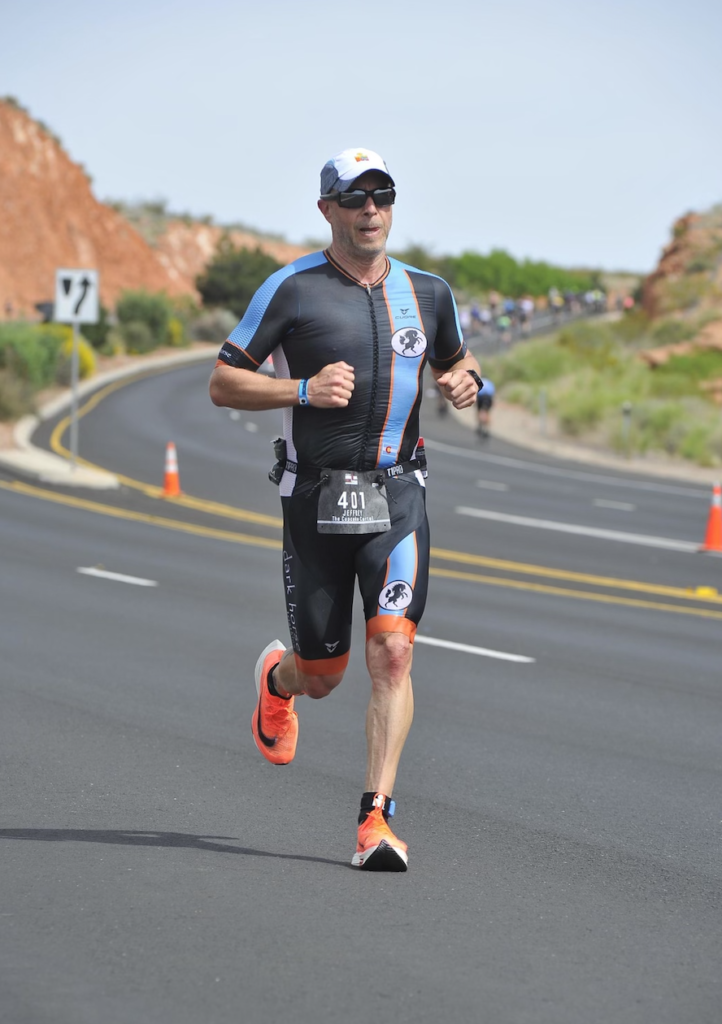
One of the best ways to prepare for the mental challenge of your Ironman is to practice an optimal mental state during training. A well-trained athlete can significantly under-perform if they have not given equal consideration to the psychological task at hand. While the swim may be daunting and the bike challenging, the marathon is the most physically rigorous element of the Ironman, and as such, requires incredible mental fortitude to perform at the upper end of your capabilities.
I like to have my athletes take a structured approach to mentally preparing for the Ironman marathon, done in steps. Work through the following five steps, one after the other, to ensure you have covered all bases in your psychological preparation:
Step 1: Think About How You Want to Treat Yourself
It is easy to slip into a spiral of negative self-talk and doubt when you are facing another 20 miles of running; if you are very tired, and particularly if things aren’t clicking. Pre-determine an emotional reason for being out there, or a personal theme. You will ask yourself, “What am I doing out here?” so it’s important to have an answer on hand. It may be to inspire your family or kids to go after their dreams…or perhaps it is just to constantly remind yourself that you have chosen an exceptional thing to do with your life’s journey…or that you are an amazing athlete and person for even toeing the line of such a daunting and monumental race. If you trained hard, accept that the race was not going to be easy and that this is the challenge you signed up for. Bring some positive thoughts or themes with you from which you can reflect upon when the going gets tough.
Mentally rehearse the conversations you want to have with yourself. It’s easy to talk yourself down when you are tired and blood sugar is low. Being negative gives you absolutely nothing as far as performance benefits. In fact, it takes precious energy away from going faster.
Recognize negative thoughts in training, and find ways to turn them into positive moments. Become aware of your self-talk. Decide to speak to yourself with respect and encouragement. We hear many athletes talking themselves into having a bad race. Talk yourself into success, and allow yourself to realize your full potential. Being good to yourself is habit-forming. You learn to throw out negative thoughts before they occur, and begin to consistently use positive self-talk and self-imagery.
Step 2: Get a Home Course Advantage
If you ever had to run an Ironman marathon on your favorite training route at home, you would have much greater odds of success. You would know every hill gradient and duration, where the shade is, the wind tendencies, cambers, down hills to expect, rough terrain, etc. You would have a good sense of how to manage your energy and where you need to be exceptionally strong and focused. You would know how to push through the challenging areas because you have done it before. The goal for any major event is to give yourself as much of the “home-course” advantage as possible. Optimally, you would try to do a training camp on the course in prior months to learn and master the course. If that isn’t possible, tour the course on race week and run key portions of it in your race-taper sessions. Ride the marathon course on your bike. Take a map and pen and write notes on what you see out there. Try and identify landmarks along the way that are at critical sections of the course. Your goal is to be able to retire to your hotel room at the end of the day and have a fairly clear picture of the course in your mind, with some notes handy to reflect upon.
Step 3: Realistically Prepare Yourself for The Effort
Having learned the race course, revisit some of your best training efforts from back home and review how they felt as your progressed. Next, place that mental image of your training efforts on specific areas of the Ironman marathon course. It is important to be realistic, but not fearful, of the effort it will take to tackle the marathon. Be realistic about your skills and abilities as well. It is a recipe for disaster for you to expect to greatly exceed anything you have done consistently in training, and will be deflating if you are missing the mark. Mentally rehearse what it will feel like to have a steady and solid day out there, the level of effort required and the biomechanical elements of your best Ironman marathon stride. How will you feel at three miles, six, twelve, twenty and so on?
You can create technical cues to bring yourself back on task. These cues are words or short phrases that remind you of being technically efficient and bring you back on task, replacing negative internal conversation. They can also help you lift you to another level of performance when things are on track and progressing well.
A few run cues I use with my athletes to keep them moving well are “quick, light”, “strong and forward”, “rhythm from the arms”, or “loose shoulders, open lungs”. These cues are personal and should be meaningful for you. Share them with your supporters, as they will help give you energy when you are in the heart of the marathon.
Step 4: Review Your Pacing and Nutritional Strategy
Running your correct aerobic and patient pace (practiced in training) will help conserve blood glycogen, so check your time splits along the way to make sure you are on track.
When blood glycogen gets low from caloric deficiency, it’s easy for the mind to start playing tricks on you. You might suddenly not feel hungry or thirsty, or become very emotional, or very dull, classic signs of “bonking”. It is critical to have a pacing strategy supported by a nutritional strategy, and to review in your mind beforehand. When will you eat, and where? Learn where the aid stations are, decide if you will walk them or not, and how it will feel to get running again after a stop. Commit to restarting running at the end of the aid station. Think about the tell-tale signs of bonking and how you will problem-solve to work through a bonk if it happens, by slowing the pace, or walking, and getting some extra hydration and nutrition in.
Write out a schedule of what you will eat, where and when, considering aid station locations, and visualize executing your schedule on that specific marathon course.
Step 5: Have a Re-Focusing Strategy
Inevitably, over 140.6 miles, you will go through a hard, extra challenging area of the race, and the chances are it will be late in the bike, and intermittently through the run. The best athletes are great at focusing and staying on task, and they are also great at problem solving when things aren’t going well. If you get blisters, a cramp, bonk, or bloated, your goal still remains doing the best job possible given the set of circumstances you are facing. Try and remain calm no matter what, get back on task as soon as possible, and maximize what you can do right now, rather than stressing about what you can’t do. Decide that if you are thrown a curve ball, you will remain calm and make the best high performance decision you can, given the variables presented to you.
Lance Watson, LifeSport head coach, has trained a number of Ironman, Olympic and age-group champions over the past 30 years. He enjoys coaching athletes of all levels.
November 16, 2021
Key Ingredients of Ironman World Championship Qualifiers
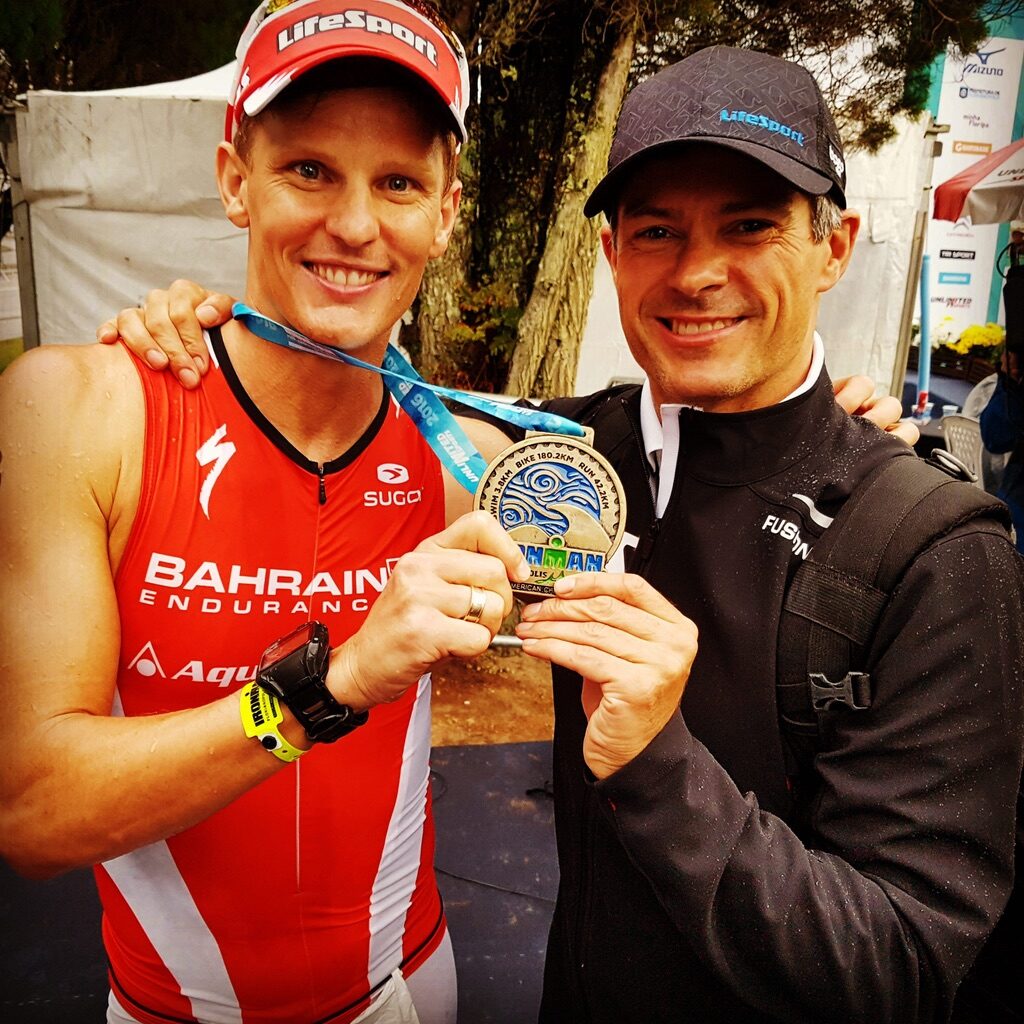
When examining Kona Qualifiers, the levels of competition are so strong that there is no accidental way of rising to the top. It is harder and harder to qualify with more Ironman events worldwide and limited spots to race in Kona. To be able to stand on the podium at any Ironman, all the competitors must arrive with peak preparation – they are in their best physical shape. What sets the champions apart is their mental edge, which is cultivated intentionally in training and through past race experiences. In my many years of coaching I have come to see some common themes in mental traits shared by top age group athletes.
Commitment
Number 1 is commitment to the A-race goal. The majority of age group athletes have incredibly busy lives; many work demanding full time jobs and will often have a family as well. The athletes that make it to Kona are those who, with the support of their spouse or significant other, make it their priority to commit to getting the required training in. They review their training schedule in TrainingPeaks the week prior. They then plan their work/social schedule with the completion of training being the number one goal. If this means joining a 6:00am Masters Group or getting up at 5:00am for a trainer session, that is what they do. They then figure out how to fit everything else in their life around it.
Positive Mental Attitude
To balance the long and arduous physical preparation of reaching the top, champions consistently maintain a positive mental attitude. Racing the Ironman distance as an amateur is tough and there is no financial reward. This doesn’t mean there aren’t moments of down, but overall thoughts are positive – this is reflected in the adage, if it was easy, everyone would do it! Therefore it must be a passion. One can’t put in 15-20 hour training weeks without a positive mental attitude and a strong sense of self-motivation to assist getting up early mornings and heading out when it’s cold and dark.
Along with the positive attitude is the use of positive imagery. They show up to practice ready to embrace the workout, whatever the coach prescribes. Successful qualifiers will visualize their success as they train. In their mind they will see themselves exiting the water after a strong swim, cresting a hill with a sense of power and even running through the finishing chute as a champion. They will also have cues as to how they will to feel on certain parts of the course.
By the same token they have to ability to compartmentalize. If a particular workout doesn’t go well, there is the immediate reflection of what happened and why. Then it is put aside and the athlete will move on to the next one. No dwelling on the past. The athlete has a strong self-belief in their abilities which is backed up by their previous training data.
Patience
Preparing for and racing an Ironman is not a venture one undertakes if one is seeking an instant reward. Getting to the start line healthy and strong requires that all the building blocks along the way were set in place properly and in the correct order. This is a process that takes years, not months or weeks. And that is just to get to the start line. Once the gun fires, an Ironman day unfolds steadily minute by minute, hour by hour.
When they are racing, champions don’t get ahead of where they are in the race. They focus their mental energy on getting the most out of their body at that moment. If it’s a tough part of the swim they are thinking about perfect technique for every stroke. On a climb, if a competitor is pulling away, they focus on pushing with a power they can maintain. It is necessary to stay in the moment. I often say to my athletes you don’t “race” the Ironman until the second half of the marathon.
Confidence
You can’t control who shows up to an event. Kona qualifiers perform on the day to the best of their own abilities and don’t get carried away with who else is there or what they are doing. Many things can happen during an Ironman and will immediately change the day, whether it is a mechanical, poor pacing or nutritional mistake. From consistent training, the top athletes know their swim splits, power outputs on the bike and run paces. They know there is no magic piece of equipment that is going to make them go 20% or 30% faster. They know exactly what they are capable of and stick to the plan they set out with their coach. This confidence comes partially from the physical preparation for the event.
They are also methodical. Everything related to racing the Ironman is laid out beforehand. In the months leading up to the race all equipment is tried and tested, discarded if it doesn’t fit or work. Nutritional plans are dialled in regularly on training rides and runs. As I have written about in the past pre-riding the course or simulating the terrain during takes the guesswork out come race day. This way there is no last minute scrambling or unsureness whether something is.
Toughness
I have often heard my athletes being labelled tough in the face of adversity. Especially after a race that was cold or held in terrible conditions. Or how a racer recovered after an especially bad patch on the run. I prefer to look at this as that athlete staying in the moment and just focusing on what they can do right then. If they can’t run, at least walk fast; if they are grumpy and low in energy, have something to eat. The important thing is that champions look for the best option for any given situation. They also anticipate the hard parts of the course and prepare for the physical discomfort. These sections are opportunities, not a section to dread.
There are many factors that play a part in how champions rise to the top; the mental game is definitely just as important as being physically prepared.
Thank you to LifeSport Senior Coach Dan Smith for his contribution to this article.
Lance Watson, LifeSport head coach, has trained a number of Ironman, Olympic and age-group Champions over the past 30 years. He enjoys coaching athletes of all levels.