LIBRARY
Blog Copy
Sorry, no results were found, search again?
November 22, 2021
Five ways to become a stronger long course runner
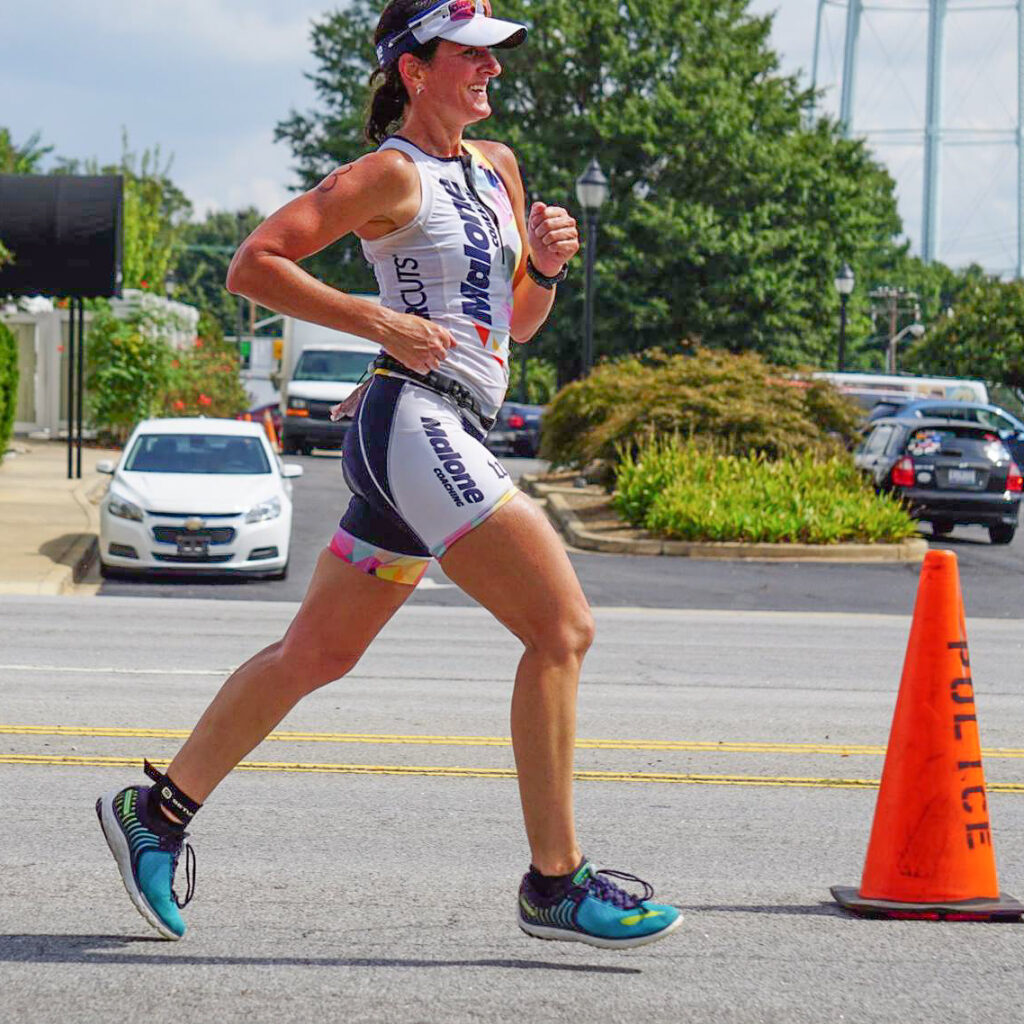
Running well off the bike is a combination of five main factors. Training specificity, or simulating what happens during a race, in your brick sessions is one aspect. Making sure that not too much energy is expended on the bike through proper pacing is another. Fueling your body with proper nutrition is a third. A fourth consideration is bike fit, along with general muscle balance and overall flexibility. A final aspect, often overlooked, is the importance of mentally being prepared to deal with that change from cycling to running.
Here is a list of how you can address each area to build your ability to run well off the bike.
1. Specificity of Training
Training specificity involves running off the bike at a pace you aim to maintain during your 70.3 or IRONMAN distance event. There are several reasons for this. One is getting accustomed to the different motion of the legs and the fact that the legs are now supporting the weight of the body. Another is training the body for the endurance and speed for the duration of the run. The best way to accomplish this is to consistently incorporate runs after both long and short rides, known as “bricks”. These brick runs will vary in duration and intensity through the different phases leading up to a race.
In the General Preparation Phase the goal is to condition the body with short 15 to 20 minute base runs following at least one bike ride per week. During shorter weekday rides, the runs can be at a higher heart rate. As you transition toward the Specific Phase the runs increase in duration.
The closer to the event, the more the runs should mimic the demands of the race. At this point they should also be at or slightly above race intensity. One example is 45 minutes as 30 minutes at goal race pace and 15 minutes easy. Another is 4 x 1 mile at 10 to 15 seconds faster than goal race with 2 minutes easy jog in between efforts. It is also crucial during the final six to eight weeks to dial in race nutrition, both on the bike and the run. The gut needs to be trained to absorb enough calories to maintain race pace.
2. Pace Your Bike
In the same vein, your pace on the bike is a huge factor that affects the run. Ride too hard and there is nothing left in the legs to push for the final 13 or 26 miles on foot. This is where having a power meter and performing consistent testing throughout training is invaluable. There is a fine line between having a superb bike and a miserable run. For strong age group competitors, maintaining an effort of 75 to 88 percent of Functional Threshold Power (FTP) for a 70.3 distance event and between 70 and 80 percent of FTP for an IRONMAN is a general rule of thumb. If you expect to be on the course longer, then these numbers need to be dialed back.
3. Perfect Your Nutrition
No matter how fit you are, if your nutrition strategy is not adequate you will eventually face the consequences. Use every opportunity, especially your race specific training, to experiment and figure out just what does and does not work for you.
Another factor of going too hard on the bike is that your leg muscles are drawing the oxygen rich blood from your heart. This means that your stomach does not empty of nutrients and fluids quickly enough, leaving you with that sloshy feeling starting the run. This then requires you to slow down to regain composure and energy.
4. Work on Your Bike Fit and Flexibility
Bike fit and body conditioning will also impact running off the bike. The ultimate purpose of riding a time trial bike is to be as aerodynamic as possible. But this should not be at the expense of comfort or the ability to produce power. If you look at pure time trial racers the position is extremely aggressive as the riders do not need to run afterwards.
As a triathlete, you are looking for a position that is balanced and allows a fairly wide range of motion at the hips. If your hip angle is too tight the hip flexors may tighten up and this will negatively affect your stride. This is why some triathletes opt for higher aerobars, or shorter cranks in order to open up the hips. To run well, your running motion needs to be fluid and relaxed.
The same thing needs to be considered with conditioning and flexibility. Many athletes tend to have occupations that require hours of sitting at a desk in a hunched over position. Regular standing and stretching as well as a routine such as yoga can alleviate this shortening of the hip flexors, lower back and hamstrings. This is perhaps one of the biggest limiters we see with the amateur athlete; finding time to develop a core strength and stretching routine. Most older athletes that are performing well are proactive about core strength and flexibility.
5. Improve Your Mental Strength
A final note to consider is the mental component of a successful run off the bike. Towards the end of the bike, many athletes are ready to get off the saddle and start running. However the changeover is often mentally tough. As the speed is significantly slower resulting is less air cooling, body temperatures often rise, and the perception of speed can feel very slow. Know this in advance and prepare for it. Use the first few miles to dial in a rhythm by focusing on cadence and proper form. Once the body settles in the mind can then pick off one segment at a time. It is important to stay in the movement and not get too far ahead of oneself during the run.
Begin to incorporate some or all of the above elements in your training and the races will become that much more satisfying. And complete.
Thanks to LifeSport Senior Coach Lance Watson for his contribution to this article.
LifeSport coach Dan Smith is a NCCP certified triathlon coach whose experience over 20 years has lead athletes to secure a spot in Kona and hit the podium on a consistent basis. Dan’s knowledge and experience allows him to customize a program for beginners to pro athletes. Contact Dan to share your goals, race faster, or master the Ironman distance.
November 22, 2021
New swimmer: Are you overthinking it?
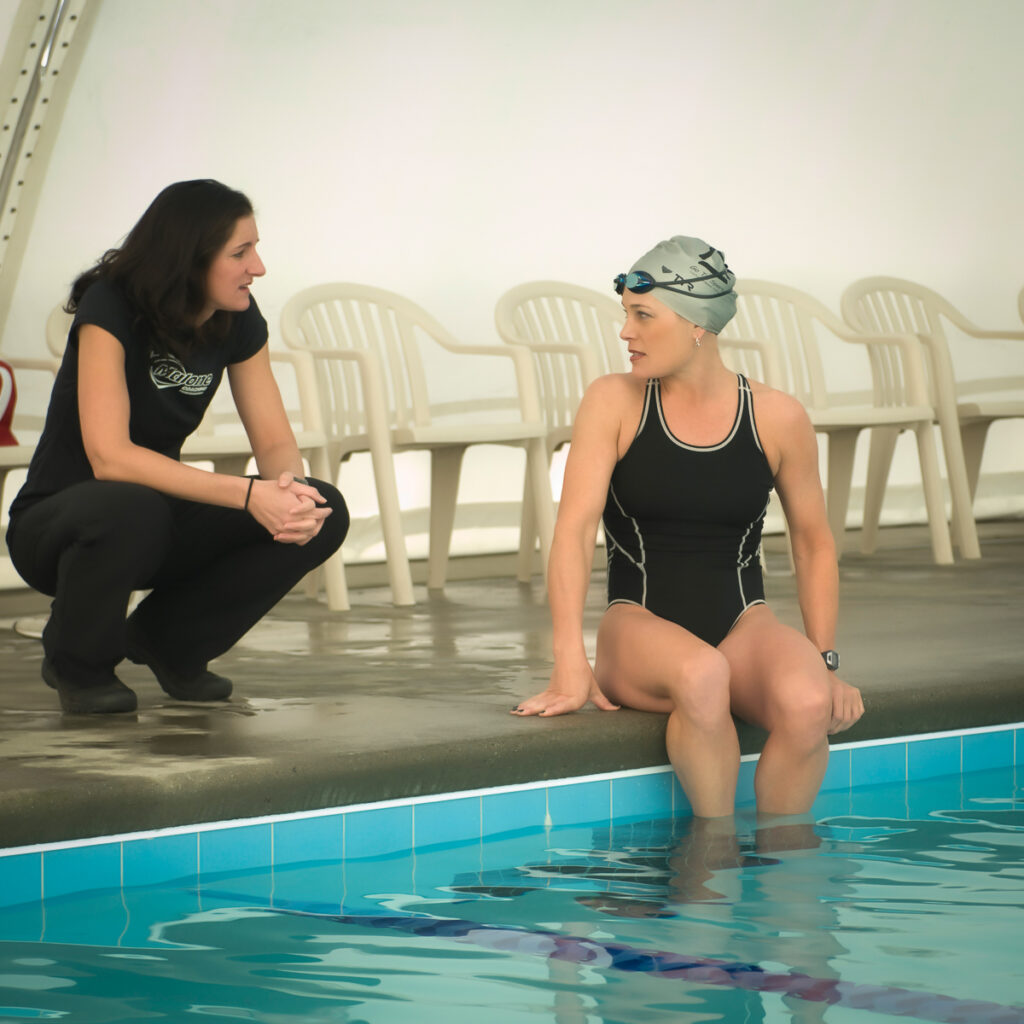
“Here is what goes through my head on a 100m effort in a group swim….
Five seconds after she leaves I go. Ok, go. Pace my arms evenly. Count strokes, breathe in the pocket, lead with my middle finger, keep the anchor arm out, don’t drop my right arm when I breathe, oops! There’s the wall, streamline, how many strokes was that? Must have been 15 because there were two strokes before the turn, keep it long, don’t hold your breath – exhale evenly. Am I leading with my middle finger? Think fingertip drill – keep those elbows high, 11 – 12, there are the flags, this is going to be 16, damn, whoa, almost hit that guy on the turn, is he getting closer? Focus, don’t shorten up, anchor arm, breathe behind you, are those her bubbles? Or my bubbles? Would I even be able to see my own bubbles? Keep your head down, look for the bottom of the pool, hook your arm at the catch so I feel the lats, no, that doesn’t mean drop your anchor arm, there has to be a tipping point there. Hey! there’s a guy in the lane next to me – wonder if I can stay with him, there’s the blue T…if I stretch I can flip…damn nearly missed the wall on that one. Ok, I must be close to her because it’s getting really choppy in here. Breathe evenly, stay long. Is she going to be pissed if I smack her feet? If I angle my arms to the right lane line maybe I won’t hit her. I think that was the same number of strokes per length except the first one. I wonder how many we’ve done? Good thing she’s counting. Oops – there’s the wall”
Recent recollections from Juliet, a former Olympian, newer swimmer, and cerebral athlete.
This excerpt is an interesting thought process to analyze. Most of the technical elements are super relevant, and the experiential aspect of trying to improve technique and swim faster while navigating other athletes is something we can all relate to.
The reality is how can you possibly improve with so much going on at once? For the newer swimmer, I like to simplify. You have to finish elementary school before you go on to high school and college. As adult swimmers, we often try and skips steps and go straight to college.
I like to encourage my newer swimmers to pick simpler themes, and try not to overthink things.
Consider these 5 points, and try not to go on to the next step until you have mastered the prior step!
- Relax and Play.
Many of us over achieving super-swimmer-wannabees try too hard. We are robotic in our movement and our mind is cluttered. Watch a kid swim. They are loose, fluid and sometimes are goofing around in there. They move, play and feel the water.
Breath. Smile. Loosen up. Enjoy moving through the water. This is your play time.
- Float and Glide.
Heavy legs are anchors and wide legs make a wide slow boat. While you are relaxing, (see #1) focus on floating. Keep your head low and your legs shallow, be horizontal. Push off the wall, ride the glide, swim narrow and swim shallow.
- Pick a Simple Theme.
Once you can float, then you can pull and kick. We all have technical elements to work one. Pick one! Visualize moving well before you get in the water, and pick a single technical cue to practice that day, or for at least half the practice. When you fix one thing you often inadvertently fix something else too. It’s a biomechanical chain reaction.
- Quantify and Feel.
How do you know if you are improving if you don’t measure it? Counting strokes is a great way to measure efficiency. Less strokes to get to the end of the pool sounds efficient, right? Count regularly. Time yourself each day and FEEL how fast you are moving. After a while you can internalize an effort and know how fast you are swimming without looking at the clock. That’s handy in open water.
When you are good at counting and timing, you can combine the two. Taking fewer strokes at the same finish time is a nice indication of increased efficiency. You will feel more water pressure against your arms and you will feel your body flow fluidly through the water.
- Focus on what’s working.
Swimming is technical and sometimes things don’t click. Rather than over analyzing, or reconstructing your stroke, instead focus on something that is working. If your left arm catch is wonky, focus on your stroke rate. If your kick timing is off and you just can’t get it, focus on your breathing. If you are working hard and times are not great today, focus on relaxing and swimming the same times with less effort. Reinforce a positive element in your stroke rather than fixating on one that isn’t.
Lance Watson, LifeSport head coach, has trained a number of Ironman, Olympic and age-group Champions over the past 30 years. He enjoys coaching athletes of all levels. Contact Lance to tackle your first IRONMAN or to perform at a higher level.
November 22, 2021
The High Performance Taper
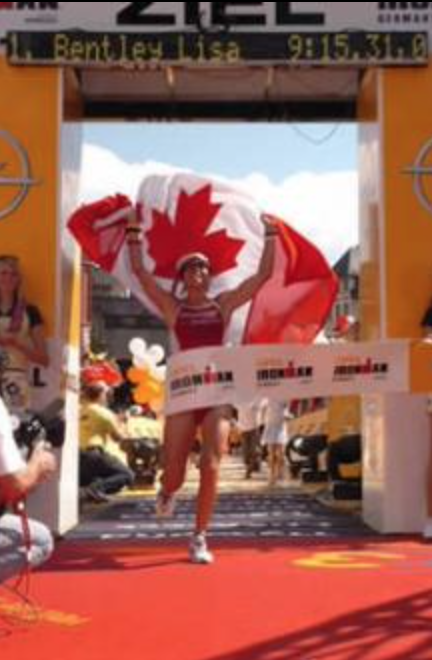
You’ve done the hard yards, the long miles. Its 2 weeks till your Ironman, or “A” race. It’s time to hit the couch, put your feet up, and do nothing… or is it? Though the bulk of the physical work may be done, taper time can have the greatest impact on your race performance if done well.
While compiling some useful taper tips, I consulted Lisa Bentley, an athlete whom I coached throughout her high performance career and to 11 Ironman wins. I asked the Triathlon Hall of Fame inductee to include her taper “performance tips”.
Lower Training Volume
Lowering training volume will decrease fatigue. For major races, you should decrease training volume 2 weeks prior to the race. In the final 10-14 days before a race, no further training improvements will be made before the event. You can lower volume in your endurance workouts without any fear of compromising performance. If you normally train for 12-15 hours per week, you might decrease training to around 5-7 hours in the week prior to an event.
LB’s Performance Tip: “With the dramatic reduction in training, it is important to keep moving, to stretch and get massage. Don’t do anything that you don’t usually do. For example, don’t try yoga if you have never done it. Yes, yoga can be relaxing, but it won’t be relaxing if you over-do it.
During these 14 days, do not “test” yourself or your fitness. If you can commit to this, then you will make two huge strides in your taper. First of all, you will not “think” about testing yourself and that will give your mind a rest from unconfident thoughts and you will be able to focus confidently on your race visualization. Secondly, your body will thank you for the rest and all of the little training micro-traumas can heal so that you can earn some new muscular traumas on race day!”
Maintain Some Intensity
Maintain some training intensity leading into the race, but decrease the number of intervals and increase the amount of rest. Race pace efforts will prepare your body and mind for the challenge ahead, keep you loose and keep your body fine-tuned.
LB’s Performance Tip: “In terms of physical race preparation, keep your workouts short and at race pace. During the week of the Ironman, most of my sessions were less than one hour and produce no fatigue. Swim sessions focus on doing 50’s, 100’s and maybe a few 200’s at race pace. Biking and running involve some 30 second to 2 minute pickups and maybe a few miles at race pace. These are always feel good efforts with lots of rest in between. If I feel injured or ill, I ask myself “do I have more to gain or to lose by doing that session?” When on the verge of injury or illness, you always have more to lose by doing a race prep training activity. The two weeks before the race prepare you to race. Running with mild achilles tendonitis will not prepare you to race fast!”
Keep Your Training Schedule
The body is accustomed to specific frequencies of volume and intensity in training. Don’t disrupt your regular training pattern by adding extra workouts, deleting workouts and changing the time of day that certain workouts are performed. If you normally do 2 or 3 early morning swims per week, keep swimming early. With less training volume, don’t fill your day with “busy work”. Schedule restful activities, like reading and movies. Having a schedule helps keep nerves in check as well.
LB’s Performance Tip: “Replace the physical training with some scheduled mental preparation especially in the week before the race. Once I wake up in the morning, I spend an extra 30 minutes in bed with my eyes shut visualizing the race. I can see myself race day morning preparing my bike, starting the swim, at 2 km in the swim, in transition, etc. I picture myself as I want to “be” on race day – with a perfect swim stroke, controlled transitions, content and thinking positively, smooth pedal stroke and quick running turnover. I visualize excellence. There is no mental benefit to seeing my training imperfections because there is nothing that I can do about them now – but by seeing myself executing the race perfectly, I might, in fact, realize the picture in my mind. Yet, I am also realistic. I think about some of the challenges that I might be confronted with and I think about how I, the perfect racer, would want to handle them. I establish plan A, plan B and plan C. I believe that those 30 minutes was the most important part of my taper.”
Plan Ahead
The extra free time you have before a race can be spent planning your equipment. Take the time to create a checklist of items you will need. Start packing these items and buying supplies (like PowerGels and Salt Stick) well before you leave for the event. Get your bike to the shop early. Determine what outfit you will race in, how you will carry your nutrition on your bike, etc.
LB’s Performance Tip: “Be extremely organized. Think, and rethink all the logistics of the race. Being disorganized leads to stress, which takes energy away from your race. I make lists of things to do each day. I also make a list of items for my swim to bike bag and bike to run bag and a list of things that I need to bring to the race on race day morning. Trust me, your rational thoughts will be doing flip-flops in the 48 hours before the race and you will not trust yourself to remember everything. I prepare the lists when I am still rational and not nervous or too excited. Then, on race day morning, I just check off the items on the list. Yes, the pen shakes in my hand, but I can get the job done.”
If You Are Travelling…
Travel should be integrated into your training and race plan. Don’t do your biggest day of training prior to a long flight or drive. Take a rest day before and after a long trip that includes very light training. Plan to stay well hydrated (not to excess) and properly nourished when you travel, carrying bottled water and healthy snacks with you on your trip. It’s important to stay mobile when you travel. Take frequent rest stops to stretch or walk around to stay limber.
If possible, try to get your numbers and race package as soon as possible after arrival. You can calm nerves and focus on the race when you have this information.
LB’s Performance Tip: “Plan to travel to the race early enough so that you can recover from the travel. Traveling east can wreak havoc on your body. You will need at least one day per hour of time change to acclimatize perfectly. Being “off” by 5% on Ironman race because of jetlag can be the difference between qualifying for the Hawaii Ironman or not. If your goal race time is 10 hours, then a 5% jetlag factor will add 30 minutes to your finish. Also, factor in time to acclimatize to the heat if you choose to race in a tropical location. I allow about 8 to 10 days to acclimatize to the conditions in Kona.”
Learn the Course
Pre-drive the race route. Ideally, you will do this at least 2 days before the actual event – don’t jam up your pre-race day. Take the time to study the terrain and think about your pacing and race strategy. Knowing the course is one of the keys to maximizing your performance in any race. If the race is a major goal for the season, you may wish to plan a scouting trip to the venue prior to the race. You could do this several weeks or even months ahead of the race.
LB’s Performance Tip: “Once you factor in travel recovery time, also consider arriving at your race destination early enough so that you have time to tour the course. Those 3 days before an Ironman are so busy with registration and preparing your gear for race day, that you might need another day in your itinerary allow yourself the opportunity to see the course. By driving the bike course or riding portions of the route or doing one of your pre-race run sessions on part of the run course, you will be able to add that visual to your pre-race mental preparation and you will be doing hands-on visualization. Three days before Ironman, I drove the bike course and identified the key areas where my skills would be maximized and areas where I might have to be extra tough. On race day, I used this information and built those elements into my race strategy.”
Attitude of Gratitude
All the work and preparation are over, and it’s time to get out and enjoy your fitness. Remember how lucky you are to have a health body and to be taking part in the sport you love to do with a group of like-minded people. Decide to enjoy the day.
LB’s Performance Tip: “As important as mental preparation is, be sure to take time off from all race preparation. Do your mental homework and leave it. Do your physical race prep and then leave it. Visit the expo and register and then leave it. Fill your mind with other thoughts. Avoid mental overtraining and avoid excessive race stimulation. I set aside scheduled time for all of my race tasks and for my mental preparation and once that time passes, I move on. Often, I’ll slip into mental prep mode accidentally, but I quickly remind myself that I have done my mental rehearsal and it is “me time” or “family time”. At the Hawaii Ironman one year, I found myself so over-stimulated that I could not go to the expo and I never swam at the pier (Dig-Me Beach). I can sense when I need a break from race mode, but the difficulty is in acting on it. Race day requires so much mental stamina that you need to rest your mind in those days before the race. Read a novel. Make a list of movies you had to miss during your Ironman training and rent them. Don’t necessarily plan any big projects for your taper because your mind needs to rest. Planning your garden or house renovations will not be a rest.
Avoid being over-stimulated by your friends and family. Everyone around you will be in race mode. Some of your fellow competitors might be panicking and they might draw you into that panic mode. Remember those high school days of writing exams. There were always those anxious students. “Did you study that? I studied for 20 hours. Oh I learned that stuff. Of course that chapter is on the exam.” Meanwhile, you studied for 10 hours and only dabbled on that particular chapter. Resist comparing training schedules and long ride and run frequency and duration. You made your training and coaching choices. Accept them. Avoid being around people who drain your energy. Create space for yourself away from the Ironman chatter. You will likely even need to distance yourself from well-meaning and loving family members who might be full of suggestions which might only serve to un-nerve you.”
Lance Watson, LifeSport head coach, has trained a number of Ironman, Olympic and age-group Champions over the past 30 years. He enjoys coaching athletes of all levels. Contact Lance to tackle your first IRONMAN or to perform at a higher level.