LIBRARY
Blog Copy
Sorry, no results were found, search again?
December 11, 2021
Christmas workout!

With Christmas holidays approaching, festivities abound and there are several distractions pulling you from your hard-core training program. In an effort to help you maintain dedication to personal excellence, I have drawn on my 30 years of coaching experience to piece together a holiday specific training program. The key to success is following it down to the finest detail. While it may not necessarily make you faster, it should certainly keep you entertained!
Dec 24th Christmas Eve:
Run: 4 hour fartlek run and last minute Christmas shop. Run vigorously between shops at half marathon pace. Allow no more than 10 minutes recovery shopping per store to maximize training effectiveness and minimize shopping time. Use of a shopping cart is allowable. Consider wearing extra deodorant in consideration of other shoppers.
Strength: Pull out tomorrow’s frozen turkey (at about 15-25 lbs) and complete lunges, squats, bicep curls (2 frozen chickens will work here), and bench press.
December 25th Christmas Day.
Brick: Bike- teach a kid (yours or somebody else’s) how to ride their new bike. Take turns on the new bike, role modeling good technique on a pint size frame, and alternately running down the street as acting as spotter. Recovery drink of Eggnog for calcium, protein and simple carbohydrates.
December 26th Boxing Day.
Run: Repeat Christmas Eve run, this time returning gifts. For those looking for a few more miles, consider hitting a couple of Boxing Day sales. Refuel every 60 minutes with leftover turkey sandwich.
Mental training: Hone mental skills and focus by tackling a 2000 piece puzzle or a full day game of Risk.
December 27th
Swim: Wear wetsuit (preferably the new one you bought yourself for Christmas) around the house for 30 to 60 minutes. Do 3 sets of 10 pushups. Hop in the shower.
Cross Training: 60 minutes of Ice-skating. Whether you can skate or not, I can guarantee that tomorrow you will wake up sore, and that’s got to be a good thing, right?
December 28th
Bike: After goofing off for a few days, get out for the muddiest, nastiest mountain bike you can find, and spend all day out there. If there is a single clean spot on your bike or body, head back out for another loop. Pack a picnic of Christmas cake and pumpkin pie. Leave the gels at home!
Swim: Do swimmer’s arm circles (i.e. like the Olympic swimmers do prior to racing) while your training partner hoses the mud off you from your mountain bike.
December 29th
Run: Hill Reps. Find a mountain and go tobogganing. Run the up hills; recover on your back, stomach, butt or otherwise sliding down. For added resistance, tow a couple of kids up the hills.
Strength: While in the snow, build a snowman. Challenge yourself by Olympic lifting progressively larger snow-boulders over head with the “clean-and-jerk” technique. Give a good Schwarzenegger growl upon completion of each lift.
December 30th
Swim. OK, you should actually go to the pool today. The goal is to get rid of leftover Christmas chocolate, prior to the New Year. Consume one “Black Magic, Toffeefee, Turtle” or similar for every 100m you swim. The more chocolate you have, the further you swim.
December 31st, New Years Eve
Run: 2hrs of street hockey or flag football. Start easy as your fitness and endurance will guarantee making all the big plays late in the game as your less super-fit friends and family run out of steam.
Cross Training: a minimum of 2hrs “Dancercize”. Make sure and place extra focus on core and hip flexors as you keep your moves funky- swing those hips! Replacement fluid should be triathlete-specific. Consider Vodka and Red Bull, Gin and Gatorade, or Kahlua and PowerBar Protein drink as athlete friendly New Year’s beverages.
January 1st, New Years Day
Run: 1:00am run home from wherever you are. You don’t need to be driving this AM! Completing one mile per adult beverage consumed will keep you honest one way or the other.
Swim: After sleep in, hit the Polar Bear swim! Warm climate athletes fill bathtub with ice.
Good luck with your training, and, don’t forget your New Year’s resolution: a renewed dedication to health and fitness, and contributing to a kinder and more peaceful world.
Happy Holidays From LifeSport Coaching!
December 6, 2021
Does the swim matter for Ironman distance racing?
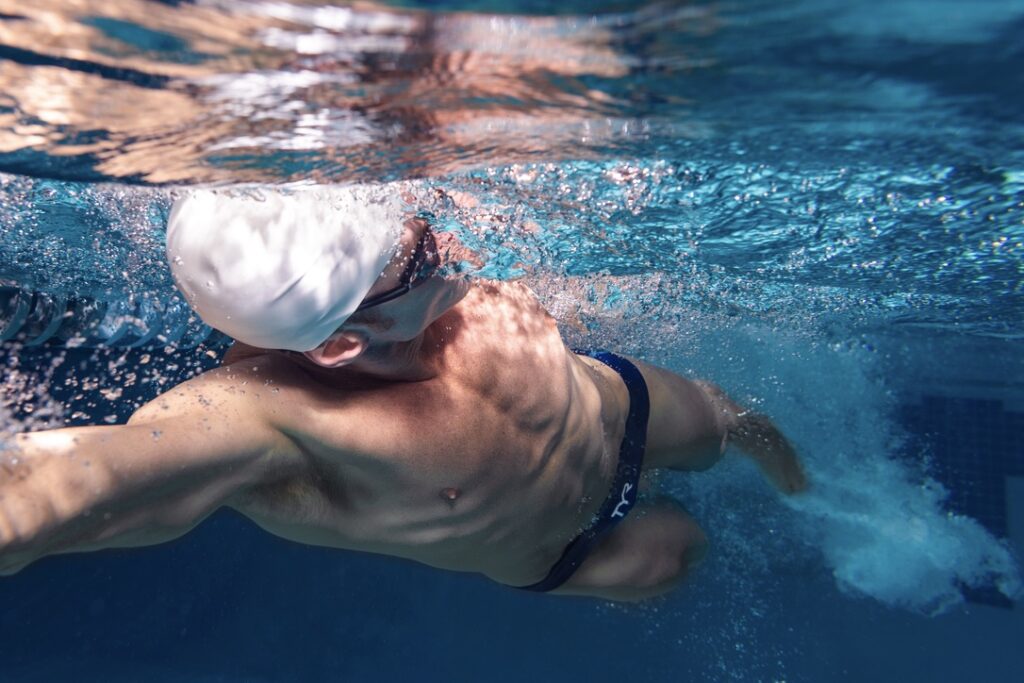
As posted on Triathlete Magazine
The swim in Ironman: You stand on the beach behind a thousand other wetsuit clad athletes on Ironman morning, nervously adjusting your cap and goggles for the hundredth time. You focus intently on the string of buoys that represent your first hour (or two) of your race day. Or maybe you are treading water surrounded by your peers and competitors of the sport, mind and muscles ready for the start horn and the subsequent chaos.
Swimming 3.8k across open water is a defining part of the Ironman. For some athletes it represents the sum of their greatest challenges in learning how to swim or in conquering a fear of open water swimming. For others, their swim position will set them up for either a good day or a great day of racing. The swim may be the shortest duration of all three legs of Ironman triathlon, but athletes still need to be as prepared as possible for it, to set them up for overall success.
The swim matters for different reasons depending on the skill level and experience of the athlete. A beginner Ironman athlete or a less proficient swimmer has to focus on swimming fast enough to make the swim time cut-off, and training should be geared towards being able to make the distance comfortably and safely. Athletes who are nervous about open water swimming spend valuable energy being tight while in the water. To swim efficiently and well, the body needs to be relaxed and the mind needs to be focussed on technique and the process, not on whether there are sea monsters lurking below the surface.
There are various things that create fear in the minds of novice swimmers. Below I have listed some of the more common plus some tips for workouts and drills that should allay these fears and allow athlete to focus on success.
For most of these issues, an ability to mentally see yourself being successful is a huge part of overcoming nervousness. Work out what makes you nervous and decide to become a stronger athlete by changing your thought process and behaviors. Practice focussing on the process of swimming and thinking positive and relevant thoughts in training and turn strong fearless swimming into a reality on race day.
Swimming in close proximity to others:
The best way to get used to swimming with others is to get out and practice it. Swim with buddies side by side in the lane in a pool to start. You know nothing can happen in a pool, so there is an element of safety there to allow you to relax and focus on your stroke. Practice being bumped and having your arms and torso hit by other swimmers as this commonly occurs in Ironman. When you can, move to open water swimming and get as many people as you can to swim around you. Practice starts as well, even if you are a conservative starter.
Fear of losing goggles and the ability to see:
It’s no use wasting mental energy on what might or might not happen. The best thing is to plan for success. Make sure your goggles fit, are on tight, and even under your swim cap to ensure the straps don’t get jostled or pulled. If you do lose your goggles, keep your cool, and practice strong distraction control. Put them back on as quickly as you can and don’t worry about getting mad at whoever might have done it.
Fear of not being able to see the buoys and the course (thereby swimming off course and going longer than necessary):
Being able to follow the course is an important part of the swim and learning how to sight while maintaining efficiency is a unique aspect to Ironman. Again the best thing is to practice. You can sight practice in a pool and while doing any open water workout. Before a race, get as much information about the course as you can, from both the land and the water. Most Ironman courses are set up for a week before the race and even offer open water swim races or sessions over the course. Do the course and learn to look for larger markers on land which will help if you lose sight of the buoys.
If you are already an advanced swimmer and very comfortable with your open water swim skills, there are still things you can consider and work on to optimize your racing performance.
While swimming in open water or rough water, pay attention to efficient swimming, saving energy for forward momentum. Staying streamlined, reducing sighting to as few ‘glances’ as needed and moving with the water will optimize your swim fitness.
Learn to draft well and to look for the draft. Drafting economizes your effort out there and can result in superior swim times. Again being able to draft while maintaining efficiency is crucial to swimming economy and speed.
There are a few other good reasons to work on your swimming and improve your swim times.
Having good start speed will get you a good draft with faster swimmers. Being on the ball and able to maintain good rhythm to get a good draft early could save you five minutes on the swim.
As well, having the ability to get out of the water in under an hour will put you into the competitive zone and you will come out of the water with fewer athletes. Your transition will be less congested and smoother and you will have clear air at the start of the bike, and a clear head as you won’t be worrying about draft marshals. As the main pack starts to arrive at T1 after about an hour, the bike start gets busy and it’s harder to stay out of the draft zone.
If you already an efficient swimmer you can do a mini focus block of swim training early in the season, or during the Ironman build. Pick 2-3 x 7-10 day blocks of training where you top up your swim fitness. During the training block focus on increasing your swim frequency (swim 5-7 times in 7 days) and include a few key workouts.
While you won’t want to neglect your bike or run training to prepare for Ironman, being strong, confident and fast in the water should be a part of your goals.
Sample sets:
- Sighting: swim 15-30 x 50 (20″). Alternate as: #1: 25 head up and sighting, 25 head down long stroke. #2: Head up and sight every 3rd stroke. #3Head up and sight every 5th to 7th stroke. Note finish time and energy expenditure for each. Practice swimming quick and relaxed and being alert with changing head and body position. Try not to drop legs when lifting head.
- Swimming in a crowd: swim 10-20 x 50m (20″), 3 athletes side by side in one swim lane. Swim in close proximity. Are you relaxed? Can you swim your own stroke? Can you alter your timing occasionally to avoid arm contact? Make sure and swim in the middle, left, and right side. Swim slightly (a half body-length) ahead or behind as well.
- Swimming in a crowd: swim 20-30 x 25m (30″‘) with 5 in a lane. 3 athletes side by side in the 1st row, and a 2nd row of 2-3 athletes depart a half body length behind. Sprint, trying to move quickly, yet relaxed. Make sure and try all different positions in the first and 2nd row of swimmers.
- Swimming in a draft: swim 4-8 x 400m (1′) with 3 swim partners of similar abilities. Lead for 100m, peel off to the side at the wall, and then jump on the back of the train. Draft head to toe behind the next swimmer. How close can you swim without touching toes? Notice the difference in energy output from 1st in line to last. Purposely bump each others feet. Try and swim relaxed with contact at your feet.
- Start Speed: swim 10 x 150m (1′) as 50m sprint, and 100m at your goal Ironman pace. Teach you body how to tolerate a little lactic acid at the start and then settle into rhythm.
LifeSport head coach Lance Watson has coached a number of Ironman, Olympic and age-group Champions over the past 30 years. He enjoys coaching athletes of all levels. Join Lance to tackle your first triathlon or perform at a higher level.
December 6, 2021
Post-Ironman return to racing
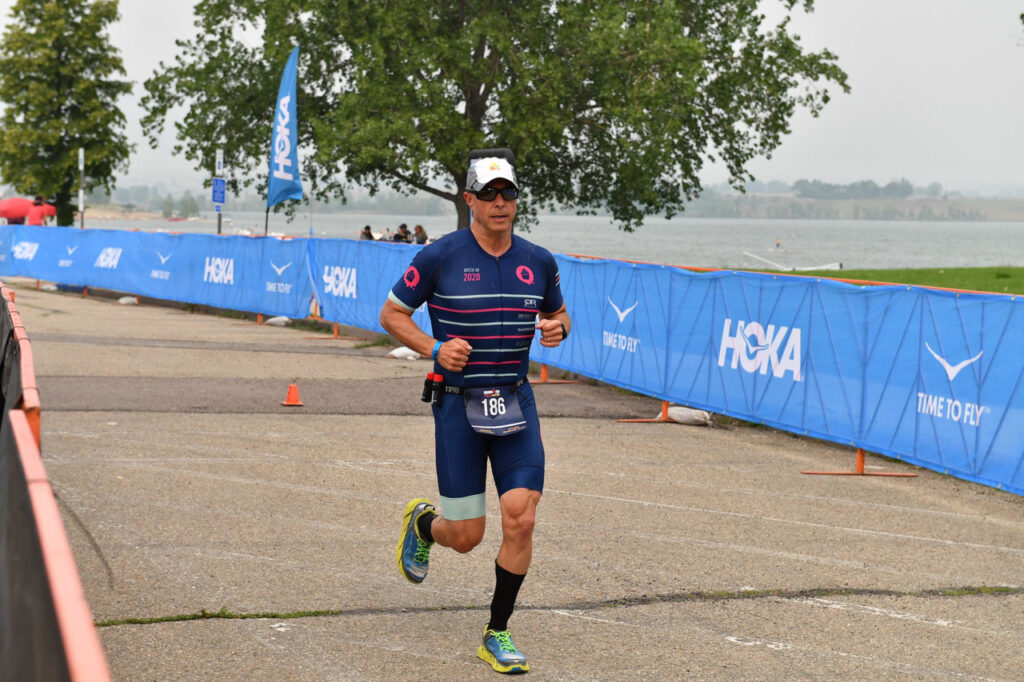
(As published in Triathlete Magazine)
After finishing Ironman, athletes commonly ask me how long it takes until they are ready for their next race. They are often on a post-big-event athletic high, and keen to rush back.
Typically an athlete will need 6 weeks to race again, so patience is the key to avoid injury or overtraining. You may not be in prime race condition 6 weeks later, but you will be ready for a good push on the race course. Alternately, you may surprise yourself by performing well with the mountain of fitness you have built for the Ironman, the fitness impact of the race itself, and feeling fresh and motivated after a 6 week break from the race course.
Here is a good 6 week recovery protocol, post-Ironman:
1-2 weeks post Ironman (2 week block) – Ironman Recovery
The first two weeks after Ironman are critical in your ability to do the Ironman double. Take special care of your body and respect any aches or pains. Particularly be careful working back into running. The highest incident of post–Ironman injury comes from too much running too soon. See the recovery sidebar for tips and tricks to hasten your recovery.
- 2 weeks of recovery and aerobic shorter aerobic activity.
- 1-7 days after the race: No running for 7 days after the race, and a minimum of 3 days completely off, avoids pounding and helps the legs recover. Take at least 3 days this week.
- 8-14 days after race can incorporate short aerobic runs (20-35 minutes), slightly longer rides (60-90 minutes), and swims.
Key sessions:
– Short Aerobic Bikes of 30-90 minutes
– After 7 days of recovery, short aerobic runs of 20-45 minutes
– Aerobic swims of 1000-3000 meters, with emphasis on technique.
3-5 weeks post Ironman (3 week block) – Aerobic Rebuild and Recovery
Gradually build back aerobic work, but still be respectful of the Ironman that is in your legs. Keep all cycling and running very aerobic through this block. You may start to feel good on the bike, but hold back as recovery will still be slower than normal. Getting too aggressive with your training too soon can set you back 2-4 weeks in your rebuild. Make sure you have planned two rest days per week into your schedule.
- 2 weeks of endurance swimming, biking and riding focused on re-building aerobic capacity and strength, followed by 1 week of recovery. The athlete should still take 2 days per week off, and overall training volume should be approximately 60-70% of your maximum training volume in your Ironman build.
Key sessions:
– Aerobic Endurance Rides of 2.5-3 hours. Include long climbs if possible
– Aerobic Endurance Runs of 1-1.5 hours. Run hilly.
– Low cadence bike riding, longer efforts of 10-30 minutes at 55-65 RPM
– Swimming Pull and Pull with paddles for strength
6 weeks after Ironman – rest, sharpen, and race.
- Take 2 days off, and perform swim, bike and run sessions with 2-4 short intervals at goal race pace.
Furthermore, consider these 10 Tips for Enhancing Your Post-Ironman Recovery
- Fitness and Technique. Prepare well and work on technique in all three disciplines. Learning to maintain technique as you fatigue, will help you race a little quicker and recover quickly. Most critical are maintaining run mechanics. If your technique breaks down early in the run, then the chances are that you are landing awkwardly and recruiting muscles that have not been conditioned for the job you are asking them to do. Using unconditioned muscles increases the load on your body and increases your overall fatigue and soreness.
- Have a pre and post-race nutrition plan:
(a) Pre-Fuel: Start the race well fuelled and hydrated – by paying attention to your diet, sodium and fluid intake you can start the race with your fuel stores topped up and ready to take on the challenge of the Ironman. By starting well fuelled and hydrated you are less likely to be fully depleted at the end.
(b) Re-Fuel: Replenish your muscle glycogen stores and rebuild muscle with protein. Try to consume 1g of carbohydrate per pound of bodyweight during the first 2 hours of finishing your race. High glycemic foods will be your best choice. You should also aim to consume 1 – 1.5g of protein for each gram of carbohydrate that you take in. Commercial recovery drinks will supply this 4:1 ratio easily since you may not feel like eating ‘real’ food straight away.
(c) Re-Hydrate: Restore your fluid and electrolytes. It is simply impossible to consume enough fluid to replace that which is lost through sweating during an Ironman event. By weighing yourself before and after the race you will know how much fluid you have lost. For every 1lb of lost body weight, you will need to drink 20oz of fluid. You can then consume the appropriate amount to get yourself back to your pre-race hydration status. Sports drink with electrolyte will help you absorb the fluid more efficiently and will help you restore your electrolyte balance more quickly. - Avoid the post-race massage: Even a light massage can cause further damage to already traumatised muscles. Leave the massage for a couple of days when it can have a positive effect. Waste products can be flushed from your legs, fresh blood brought in and tight areas worked on. A light flush massage 3 days and 7 days after your race can help circulate blood that carries oxygen and nutrients to facilitate recovery, and work out the sore spots.
- Take an ice bath – the effort of the race will have caused some damage to your muscles and some serious inflammation. Taking an ice bath can assist your lymphatic system and reduce inflammation. Fill the tub with cold water and add ice from the hotel ice machine. The water should be 13 degrees centigrade (58F) or colder so a quick dip in the lake is unlikely to have the intended effect. Sit there for at least 10 minutes. You should take ice baths immediately after the race and the day following. Your legs will thank you!
- Sleep – Make sure you get some sleep. Sleep is the time when you secrete growth hormone allowing your body to repair the damage you have done. If you need to sleep in the few days after the race then take it!
- Contrast baths: – Contrast baths are a great way of helping fresh blood start to move through your legs. The principle is to alternate hot and cold baths which will open up the veins and capillaries and allow fresh, oxygenated blood to course through, as well as helping to remove any waste products and allow healing to begin. Alternate 3 minutes immersion in hot water followed by 90 seconds in cold water. Always finish with immersion in cold water. Take contrast baths on day’s 2-4 post race.
- Avoid Anti Inflammatories: Many athletes will suffer from muscle pain (DOMS – delayed onset muscle soreness) and may be tempted to medicate themselves with over the counter pain killers or anti-inflammatories. I would caution against this as your liver and kidneys have been working overtime during and after the race. If you need more than ice to help settle the discomfort you may want to consider a homeopathic remedy such as arnica or traumeel. Homeopathic remedies have not been associated with any adverse side effects. These remedies can help reduce the swelling within the damaged muscles, reducing the discomfort you feel, and allowing you to begin your active recovery.
- Have a restart plan: Pre-plan your return to training, to avoid mistakes made by “winging it”; you can start light non-weight bearing activity (swimming, biking) 2-3 days post-race and some easy running 7 days post-race. After 10 days you can start back on your regular schedule but with reduced intensity. Having a plan will keep you motivated to start working towards your next race.
- Schedule your Life: Life stress and jumping right back into the daily grind of work and other life commitments can greatly inhibit your recovery. Pre-plan your life and work schedule so that you do not return home to a mountain of backlogged tasks. Remember, you will be tired!
- Get a checkup: Prior to re-starting training you should schedule a body screening by your body maintenance therapist (physical therapist, massage therapist, chiropractor etc.). Your therapist will check for areas of tightness or your other personal “alarm bell” indicators which may need to be settled prior to you starting the next cycle of training. Eliminating tight spots within the muscles will contribute to a more even blood flow and allow for proper biomechanics, helping to prevent and avoid injuries.
LifeSport head coach Lance Watson has coached a number of Ironman, Olympic and age-group Champions over the past 30 years. He enjoys coaching athletes of all levels. Join Lance to tackle your first triathlon or perform at a higher level.