LIBRARY
Blog Copy
Sorry, no results were found, search again?
December 26, 2021
Tips for eating out over the holidays
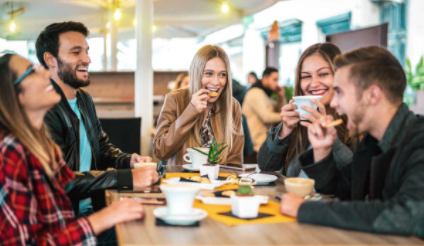
Eating out used to occur just for special occasions. With busy work schedules, however, eating out has become more common, especially during the holidays. Here are some tips to keep in mind when making choices for optimum health, energy and body composition.
- Look for grilled, baked, steamed and sautéed foods
- Try to keep away from deep fried, breaded and fried
- Include some color from fruit and veggies
- Choose dressing on the side
- Limit creamy sauces
- Request steamed or sautéed seasonal veggies
- Choose wholegrain when possible. This helps increase fiber and slow down digestion, making your meal lower GI (glycemic index)
- Choose alcoholic drinks wisely.
- 1 drink = 95cal (13.6g alcohol) = 12oz/355ml 5% beer = 5 oz/150ml 10-12% wine = 1.5oz/44ml 40% spirits
- Limit to 1-2 in social settings, alternate with water or non caloric drink
- Wine or mixed drink with soda helps limit total calories. Watch portions!
Celine Evans is a qualified Sports Dietitian with a passion for healthy food and lifestyle that inspires her athletes to optimize their health and performance with individualized practical advice to reach their goals. To find out more about working with Celine or any of the LifeSport coaches, please email office@lifesportcoaching.com.
December 26, 2021
Health Tips: Keeping the bugs away over the fall and winter
There tend to be more colds, flus and runny noses at this time of year; here are some tips to keep them at bay:
- Eat a diet rich in antioxidants; color your plate. Aim for 5+ servings of veggies daily.
- Wash hands often, especially after touching surfaces that contain germs, blowing your nose or sneezing into your hands.
- Cough and sneeze into your sleeve/arm rather than in open air and or into your hands.
- Carry hand sanitizer for outings; keep some in the car.
- Stay hydrated. In cooler weather we tend to drink less especially if we feel cold. Enjoy hot herbal teas, green teas and hot water with lemon.
- Take Vitamin D. With reduced daylight hours and layering up we don’t make enough Vitamin D during this time of year. Recommendation is to take 1000-2000IU/day.
- Vitamin C is a great antioxidant to take if you are starting to feel run down or on the verge of catching a bug. Remember that this is a water soluble vitamin; split your dose for maximal absorption. Recommended: 1000mg/day x 8-10days…remember to take a break from it to prevent this dose from being effective later in the season.
- Try to get enough shut eye. Shoot for ~8hrs of quality sleep to help your body recover from training and the day’s activities.
- Take a probiotic. This helps create and keep a healthy gut flora. This is a must if you have taken any antibiotics but also helpful to boost immunity and overall gut health if your diet is not as colorful.
- Consider getting an annual flu shot.
- Stay up-to-date with COVID shots! The CDC recommends anyone over the age of 6 months to get vaccinated for 2021-2022 year. Booster COVID shots are available and are strongly recommended.
Celine Evans is a qualified Sports Dietitian with a passion for healthy food and lifestyle that inspires her athletes to optimize their health and performance with individualized practical advice to reach their goals. To find out more about working with Celine or any of the LifeSport coaches, please email office@lifesportcoaching.com.
First published in Training Peaks, December 2021.
Over the past several months I have been writing about novel therapies that are marketed to athletes to improve recovery from injury. In this article I am going to consider a relative to something I wrote about recently, low level laser therapy (LLLT) that is advocated more as a recovery tool than for helping with injuries.
As you may recall, LLLT leverages photobiomodulation to exert its effect on the body’s tissues. The theory behind this is that when light of certain wavelengths penetrates the tissues it causes changes within the cells to produce a result. In the case of LLLT research demonstrated those results were at best pretty modest with evidence really only to support its use for chronic achilles tendinopathy.
While LLLT utilizes light of a fairly short wavelength, red light therapy makes use of visible light with a much longer wave length and is suggested to have very different effects. There are several manufacturers of LED red light panels who claim that their use can impact everything from sleep quality to skin appearance to sexual function to athletic performance and more.
These panels are quite costly, ranging anywhere from hundreds to thousands of dollars so the discerning triathlete would be wise to wonder whether this is an investment that can be expected to pay off with any of the promised benefits.
The theory underpinning how red light therapy works is similar to that for LLLT. With red light therapy, longer wavelength visible and near infrared light is applied to the skin and upon penetrating the cells, mitochondria absorb it and have their function modified so that they produce more ATP, the energy molecule for the cell’s functions. This is hypothesized to improve performance and endurance sooner after hard workouts than without using it.
The evidence to support most of the claims being made by manufacturers of red light therapy devices is either very scarce or very weak or both. However, there is a fairly robust amount of evidence on the use of this modality for exercise performance. A review article from 2016 summarized much of this evidence.[i]
A first group of studies evaluated red light therapy when applied to the upper extremities as a means to improve performance or recovery after hard efforts. Studies evaluated both objective markers of performance as well as biochemical markers of cellular damage and subjective reports of muscle soreness. While some studies in this group reported improvements in biochemical markers of cellular damage with the use of red light therapy, this finding was not associated with any objective measures of improved performance nor any reported improvements in delayed onset muscle soreness (DOMS). A single study in this group of ten reported a small improvement in performance.
In another group of studies evaluating red light therapy applied to the lower extremities the results were very inconsistent with some studies finding improvements in performance and others not. Similarly there was inconsistent reporting of improvements in subjective reports of discomfort associated with DOMS and no findings to suggest any changes in biochemical markers of cellular damage in these groups of athletes.
A final group of studies sought to determine if red light therapy might have longer lasting effects on cellular functions. In these papers, researchers reported on experiments that were designed to evaluate if red light therapy could change cellular functions over time in a way that would benefit an athlete by leading to improvements in muscle tissue architecture and the ability to handle oxidative stress.
It was theorized that longer term exposure to red light therapy might up regulate the expression of certain genetic pathways altering both of these characteristics. Once again the results were very inconsistent. Some studies did report changes in muscle architecture over time but those changes were not associated with any performance benefits. No studies found any improvements in the ability of tissues to handle oxidative stresses.
It would appear that based on what is known about photobiomodulation and specifically red light therapy at this juncture, it remains an interesting yet very much unproven technology. While there is clearly the ability to mass produce and market these devices the evidence to support their use remains as yet, lacking.
It would seem that this is another example of a technology that has significant theoretical benefit but no proven clinical benefits just yet. That may change as additional studies are done, new applications are developed or the technology is modified in some way but for now, red light therapy remains very much a novelty and not worth the significant investment.
Train hard, train healthy.
Jeff Sankoff is an ER physician and LifeSport Coach with over 20 years of experience in triathlon as a coach and competitor. Jeff is also the founder of the Tri-Doc Podcast. To contact Jeff about coaching and chasing your triathlon goals, contact him at jeff@lifesportcoaching.com.
[i] Ferraresi C, Huang YY, Hamblin MR. Photobiomodulation in human muscle tissue: an advantage in sports performance? J Biophotonics. 2016;9(11-12):1273-1299. doi:10.1002/jbio.201600176