LIBRARY
Blog Copy
Sorry, no results were found, search again?
October 13, 2021
Five off-season mistakes to avoid

Avoiding Common Off Season Mistakes
When we think of the off season, we often rush to shut everything down, take a break and put our feet up. This is not necessarily wrong: Time off should be a relished element of the postseason. But – believe it or not – you can go too far! The off season offers some awesome opportunities for nourishing and building a healthy, happy, fit and fast new year. Here are five common mistakes to avoid.
Mistake 1: Staying skinny.
That just might sound like your coach gave you a “get out of jail free” card! This is not quite the case. But if you have been racing endurance events for the past 6 to 8 months, the chances are that you’ve reduced your body fat and started to break down muscle. Most top athletes will try to add a little bit of body fat through the winter. Simply put, increase your body weight by 2 to 3%. Decreased training volume with a sustained calorie intake might be all it takes…but make sure to enjoy some treats along the way. Focus primarily on a nutritious plate with whole foods and lots of colour. This extra weight will keep your immune system robust while giving you something to work from when you start to ramp up endurance miles in the spring and build muscle back in the gym.
Mistake 2: Turning your brain off.
While it makes sense to back off overall volume, the off season is a prime opportunity to develop sport specific skills. Because you are not in perpetual train-race-recovery mode, you have the ability to consistently work on technique. Spend less time looking at the pace clock and more time looking at video. This is your golden opportunity to become a more efficient athlete. Work with a skills coach to learn how to handle your bike like a tour racer or dial-in run posture like an elite marathoner. Learn the difference between stroke rate and stroke efficiency in the pool, adding both to your toolkit.
Mistake 3: Avoiding intensity.
While we want the body to regenerate through the winter, it is also important to sustain movement efficiency. Overall training should be more aerobic in nature and skill oriented, but it is important to move at sport specific intensities to maintain neuromuscular efficiency, while staying in touch with your aerobic and anaerobic threshold. Do 25-35% of your typical weekly workload in zone 4 or higher and sprinkle intensity throughout the week. It should all be “feel good” fast as opposed to “going to the well” fast.
Mistake 4: Getting weak.
Reducing endurance training is an opportunity to increase strength. Athletes who race multiple endurance events of over three hours throughout the year run the risk of becoming too lean and starting to catabolize muscle. Endurance sports tend to be very linear in nature, causing us to grow strong in some areas and weak in others. Cut back on the endurance activities and add an extra gym day or two for a total of 3-4 times a week. Outside of the gym days, do core strength and mobility; you can do core exercises every day. Mixing up your routine and working your sport-specific muscles on multiple plains keeps you fresh and teaches the body to be strong through diverse movements instead of completely linear. Consult a professional to determine muscular imbalances and to keep your strength scripts fresh and relevant.
Mistake 5: Being anti-social.
Get off your indoor trainer and spend some time working out with friends. This is the time of year when nailing threshold sets is far less important. Ride and run with slower friends you don’t usually get the chance to train with. Go for a walk/jog/hike with your partner. Try some other cross training activities. Play street hockey with your kids. It is really important to periodize your season mentally in the same way that you periodize the year physically. Race season is shifted towards competition simulation and an on-task focus, striving for that high-performance mentality. At this time of year, focus on enjoying your training environment and social circle: Celebrate your health, fitness, and this awesome sports endurance community that we all love.
Lance Watson, LifeSport head coach, has trained many Ironman, Olympic and age-group Champions over the past 30 years. He enjoys coaching athletes of all levels. Contact Coach@LifeSportCoaching.com to tackle your first IRONMAN or to perform at a higher level.
October 13, 2021
Are you too dependent on technology?
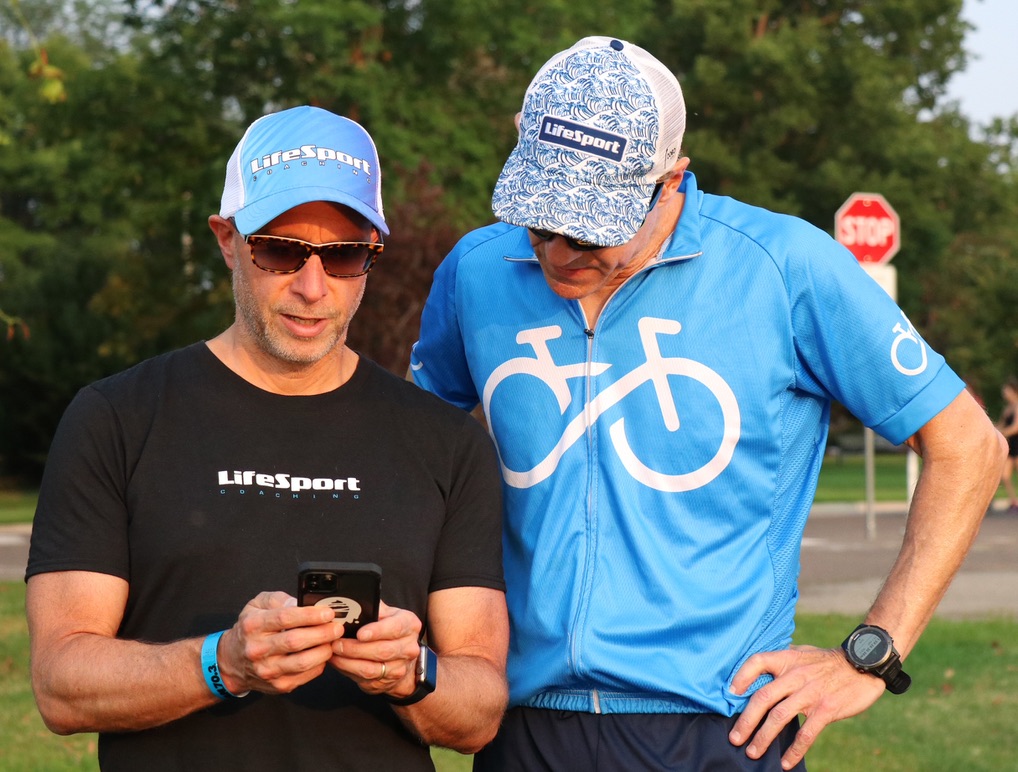
Technology has revolutionized both coaching and the ability to measure athletic training and performance. From early heart rate-based training and VO2 and blood testing in the 1980s to the advent of cycling power meters, GPS, and biomechanical and lactate analysis in the 1990s, the opportunity to quantify individual athletic performance and to refine targeted training progressions has never been greater. But is there a point at which too many variables cloud the pure process of mind-body connection and an athlete’s innate understanding of her own physiological processes under cardiovascular stress?
As a coach I use technology to measure performance gains and to identify development within different energy systems, refine and demonstrate technique, and educate athletes about the adaptations happening within their bodies. But I have observed situations in which athletes become so technology oriented that they have a hard time executing workouts without uploading their structured program into their Garmin or Polar. There is a lack of understanding as to the “why.” What follows is the risk of becoming a training robot, mindlessly following the instructions of their technology.
I encourage my athletes to look forward at their training calendar progression and understand how a workout in one week builds to the next – the layering of the main sets within a bike threshold progression as an example. It’s great to quantify these workouts, to understand how cadence impacts heart rate and power, or how heat, nutrition and fatigue might play their role. But the ultimate outcome I’m looking for as a coach is the athlete’s ability to associate numbers and metrics with an innate sense of movement, proprioception or feeling. When you are swimming in the open water, for example, there is no pace clock or a coach counting strokes; those metrics need to be internalized in your mental toolkit. You need to feel how you are flowing through the water efficiently and at what pace, knowing the consequences – good or bad – of efficiently sticking with a draft group or bridging up to the next pack.
So the next time you are fretting over your TSS or CTL on Training Peaks, take a step back and think about how you felt in past measured training sessions. How did you move at that certain output? What were your biomechanics on that pace time? Visualize that movement and think about translating a level of efficiency from the training arena out onto the racecourse. Ultimately, I think it is healthy to train intermittently without technology. Or to put your Garmin in your pocket and analyze the data after the fact. See if your perception of your output matches the quantified measurements.
Technology has its place and can absolutely transform your performance. Take the feedback and keep reconnecting to perceived effort and efficiency of movement. Have a strong visual of how you will move and manage a key practice before you begin. Debrief practices with your coach, understanding what the numbers say and how they impacted your head and your heart!
Lance Watson, LifeSport head coach, has trained many Ironman, Olympic and age-group Champions over the past 30 years. He enjoys coaching athletes of all levels. Contact Coach@LifeSportCoaching.com to tackle your first IRONMAN or to perform at a higher level.
October 13, 2021
Practice Habits of Champions
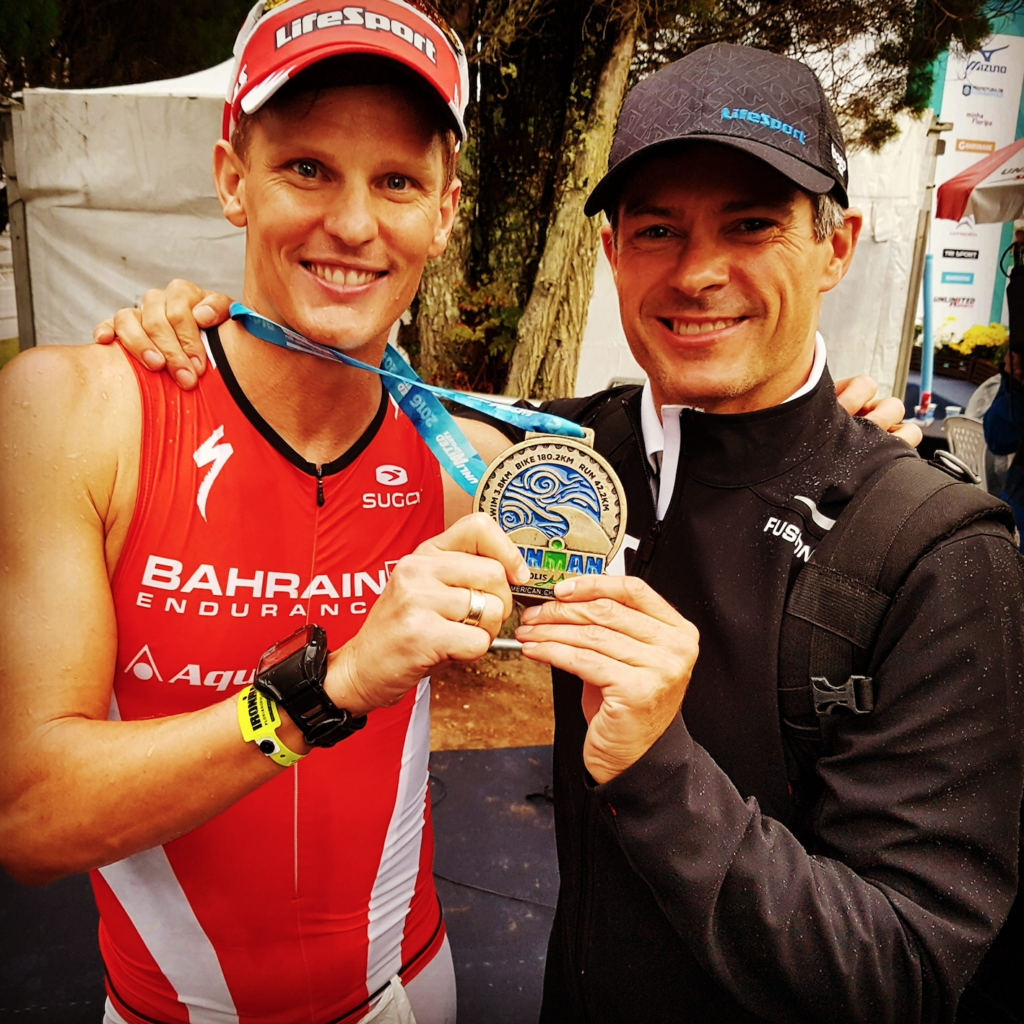
Over the last 30 years I’ve had the good fortune of working with many successful champion athletes, both professional and amateur. During that span I’ve seen talented athletes have middling careers and alternately, I’ve seen promising athletes have long and fruitful careers. This is largely due to the habits that they create with their day in and day out focus. The groundwork for excellence is laid in practice. We build habits around practice and those habits are replicated on the racecourse. While fitness is a critical component, as important is learning how to process discomfort and problem-solve competitive or logistical challenges to maximize personal performance.
PRE-PRACTICE HABITS.
How an athlete mentally prepares for practice greatly impacts their performance quality. It starts with attitude. Attitude is a decision. While some days are harder than others, the ability to partition life stress and tune into your optimal performance zone – that level of activation and focus you need to be on task – is a practiced skill. Focus on and replicate your positive, on-task training days; Decide to add this skill set to your mental tool box to call on at-will.
Goal setting before practice, both process and outcome, help you hone focus. To refine this, make sure you know the purpose of the practice. What energy system are you emphasizing? What biomechanics are you focusing on? How fatigued should you be by the end of practice? Spend time visualizing efficient movement before practice. Watching video of high performers is a good trick to get you in the zone.
IN PRACTICE ENVIRONMENT
I have found the most consistent performers are able to combine fun with focus. They’re excited about the practice, energized about the challenge of the day, and looking forward to connecting with their peers at the venue. Experienced athletes work with their coach and their teammates to strategize how to best execute the practice at hand. They take a cooperative approach. There may be internal competition, but that is coupled with a sense of camaraderie. An athlete who has trained in well-coached, high-performance practices knows that during “on” days they have something to give to their teammates, and during “off” days that feel harder, they rely more on their teammates to pull a little bit more out of them.
LOGISTICS
A critical part of a successful practice is logistics. By being organized and creating storage and preparation systems, equipment details are not overlooked. While this may seem like basic advice, pre-organizing multiple gym, swim or run bags, having a charging spot for your technology, ensuring bike helmets and equipment are stored in proximity, or pre-packing your training day (and maybe the car) the evening before allows you to have logistics dialed in so that you spend less time pulling equipment together and more time mentally focusing on the day’s training.
Be disciplined about arriving early to practice, creating extra time in your day as a buffer so that you can properly stretch and cool down without stress about needing to be somewhere else. Sometimes an extra 10 minutes makes all the difference.
LOG IT
Being habitual also means logging workouts immediately after practice. Have that technology on hand. With so many simple mobile technologies available, uploading files can be done promptly to your training log, as can typed or voice-to-text commentary. Performance tracking allows you to see patterns in performance and to reflect on similar workouts. The ability to compare heart rate, power, and GPS side by side is a very specific way to analyze progress. High performers log their training and provide supplementary journaling so they can better learn from their practices and increase the probability of successful performance on race day.
KEEP YOUR BODY TUNED
The last critical piece of maximizing performance gains from practice is body preparation and maintenance. Carve out time to stretch properly and add bi-weekly standalone sessions to work on mobility. Incorporating foam rolling, massage balls, muscle stim, compression boots, and massage theraguns all help keep the body tuned and ready to work. Outside of practice, other therapies such as massage, physio, acupuncture and chiro are integrated by elite athletes as part of their regular regime, not only as a means to heal after injury.
Be systematic about the way you warm up. Test what kind of warmups best activate you so that you may simulate them on race day. Start really easy – many athletes start too fast, particularly in the first third of their warmup. Warm up your neuromuscular system through activation drills and race specific movements for very short periods of time, for instance 20 to 30 seconds.
Last, prepare your nutrition around the workout. Finish your easily digestible pre-meal at least two hours prior. Pre-prepare some carbs to consume within 30 minutes of finishing practice, such as a recovery shake. Have something healthy in the fridge or the cupboards for when you get home – complex carbohydrates and lean protein.
Attention to detail in the way you practice will allow you to pull out a few extra percentage points each session. The net result over the long term is maximizing your human performance potential.
This article was origially published in Training Peaks in February 2020.
Lance Watson, LifeSport head coach, has trained many Ironman, Olympic and age-group Champions over the past 30 years. He enjoys coaching athletes of all levels.
Juliet Thompson Hochman, LifeSport Coach, contributed to this article.
Contact Coach@LifeSportCoaching.com to tackle your first IRONMAN or to perform at a higher level.
Facebook: @LifeSportCoaching. Instagram: @LifeSport_Coaching . Twitter: @LifeSportCoach . Follow and tag #LifeSportCoach