
LIBRARY
Blog Copy
September 14, 2022
Going Longer

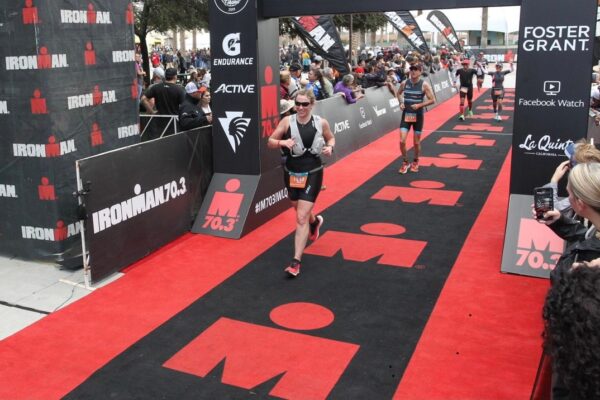
Ironman and 70.3 are incredible goals but the reality is that most people can achieve them within a balanced training lifestyle with proper planning. If you have raced shorter distance events and you’re excited about the challenge of going longer, here are a few basic pointers to consider:
1– Evaluate your strengths
Look at your results relative to other finishers in each discipline of the triathlon. How do you rank within all three? Also consider the conditions you encountered, including weather and terrain. This is a clue as to the areas you might need to improve. Additionally, do you have background in any of the three sports? If one comes more naturally, you may be able to put it on the back burner and focus on building endurance and expertise in the other two.
2 – Pick a realistic event and time line
Most people can finish an Ironman within a year. Most people could train for their first 70.3 within six months. You need to register early, so pick your goal. You will have a stronger and more successful experience if you plan a proper timeline.
3 – Create training steps – endurance and technical
Accomplishing a long-term goal includes creating achievable steps to get there. Reflecting on pointer #1 above, the next step in the journey is to create opportunities to accomplish each step towards your long term goals. Find help to learn the technical skills and create a reasonable progression to gradually build your endurance.
4 – Evaluate your nutrition
Nutrition is the 4th event in long course triathlon. A poor nutrition plan will mean that you cannot show off your true level of fitness on the racecourse. This needs to be practiced in training for any session 90 minutes or longer. Be systematic in evaluating the products. Rule out anything that doesn’t sit in your stomach. You can also train yourself to process more calories on the fly and drink more fluid overtime. You need to learn to eat on a schedule with caloric, sodium and hydration targets.
5 – Find experienced help to guarantee success: Coach and mentor
Rather than trying to learn it all through trial and error, expedite your learning process by working with a certified coach or finding a local mentor. While there are a number of factors to integrate into a successful triathlon training progression, having someone with experience in your corner will ensure a smoother journey.
If you are interested in learning more about how to train and race longer, I am offering a free clinic on the topic on October 17th. I’d love to see you at my webinar. To register, please email juliet@lifesportcoaching.com
LifeSport head coach Lance Watson has coached a number of Ironman, Olympic and age-group Champions over the past 30 years. He enjoys coaching athletes of all levels. Join Lance to tackle your first triathlon or perform at a higher level.
September 14, 2022
A CYNIC’S GRAVEL CONVERSION
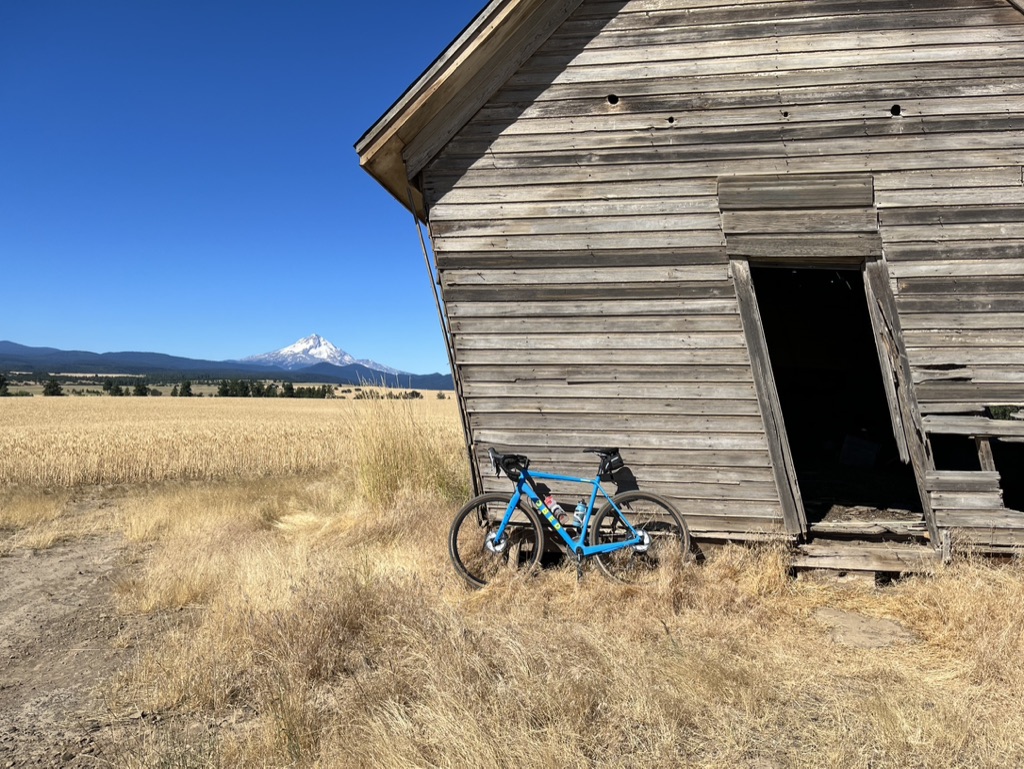
As for many, buying a new bike is not a decision I take lightly. With two boys in college, a major house construction project and the pandemic’s uncertainty threatening our household income, the opportunity to buy a gravel bike in 2020 was chewed on for some time before I jumped.
And oh goodness, I am so glad I did.
Samantha (all my bikes have names – yours should too – you spend enough time with them) did not see a lot of action at first. As races came back on line in 2021, I was focused and determined. And, honestly, my first couple of forays were disappointing. Everything where I live on the side of a volcano appeared to be straight up and straight down. I longed for the rolling, vista-filled roads I’d seen in all the videos. But my first three rides were bleed-out-the-eyeballs going up and terrifying coming down. When others waxed poetic about gravel riding, my eyes glazed over.
But on my “season break” in July (which somehow still involved multiple long rides each week) I stuck exclusively to gravel riding and mountain biking. I learned how to download other people’s Strava rides to my Garmin. I figure out how to use Strava routes. And I got lost…a lot.
I have rarely enjoyed myself so much on a bike. And that is saying something, because I love riding. I climbed through endless pear orchards and topped out in waving, golden wheat fields. I watched the progression of the cherry and peach harvests accompanied only by soaring hawks and turkey vultures. I could ride three hours and only see two cars. I saw coyotes and deer and all manner of farm animals. I thought about old friends, made plans and promises and resolutions and mentally marched through happiness, frustration, joy, longing, wistfulness and awe. But mostly I felt a profound gratitude – just so grateful to be out there on my bike riding in a beautiful place.
My attitude towards gravel biking did a 180 and I’m looking forward to a 2023 which includes some gravel races and a 5-day odyssey across the middle of Oregon. I tell my athletes to “try new stuff” all the time; I’m delighted I did the same. I won’t be surprised if there is a new Obed under the Christmas tree for my husband so he can come along too. I’ve been delighted with the comfort and handling ability of my Obed and he has take Samantha out for a few rides on his own. I can’t wait to share the adventure.
Juliet Hochman is a LifeSport coach and leads our TRiCLUB and Women’s Rockstar initiatives. A rowing Olympian and triathlon and duathlon age group world champion at both the sprint and 70.3 distance, Juliet works with athletes of all backgrounds and disciplines.
August 10, 2022
Coach’s Perspective: Defining a Win, Maintaining Motivation
Whenever I start working with an athlete, one of the first things that I undertake with them is an assessment of where they are currently and where they are trying to get to. Often, athletes come to me with pretty specific, defined goals; they want to complete a specific race, they want to beat a specific time, they want to qualify for a World Championship. Other times, they may not have a clear idea of what those goals are in which case it becomes a discussion to determine what they should be.
On the way to achieving those goals there will very likely be successes and failures. Let’s face it, rarely is the path to accomplishment a straight line! Making sure that you stay on that path is the real challenge and it is both the hardest part of the journey as well as the most rewarding. Because inevitably there will be all kinds of obstacles and detours that will arise and if you allow them to derail you or set you off course then achieving those goals that you pre-determined may become impossible. Alternatively, negotiating those barriers makes the end result that much more of an accomplishment and that much more fulfilling.
The best way to stay on track no matter what might come up is to remain laser focused on the finish line, whatever that might be but placing measurable yardsticks along the way can make the entire venture so much more enjoyable as well as just make it all seem that much more achievable.
For example, if your goal is to qualify for Kona and you are starting at the point where you have not ever even done an Ironman, it is easy to envision measurable yardsticks along the path to the eventual goal:
- Complete an IM
- Place in the top 10 in an IM
- Train consistently for one year
- Improve swim, bike and run to be competitive with top AG’ers
- Place on the podium for an IM (top 5)
- Qualify for Kona
Each of those yard sticks contribute to the eventual overarching goal and each can be considered wins on the way to the finish line. Motivation for the final goal may be difficult to maintain if say in your first IM you finish 35th in your AG and there are only 2 slots. But it is likely a lot easier to stay motivated for that yardstick of placing in the top ten because that is more achievable and a stepping stone on the way to the final goal.
Too often in triathlon I meet athletes who think only of the final goal and then when they realize how much they have bitten off, that reality discourages them and they give up on pursuing it. I firmly believe that by establishing these kinds of markers along the way to the goal it is a great way to make the whole process less daunting and therefor easier to stick with.
How do you choose what those markers are and how often to set them along the path to the final goal? The answer to this will depend on many variables; the background of the athlete, what the final goal is and how much of a jump that is from where they are starting and finally how much the athlete needs success to be motivated.
There is no doubt that we can all learn from our failures and use them to motivate us toward future successes but let’s face it, it is much more fun to succeed in the first place. Finding victories within our perceived defeats is one way that we can ensure that we remain positive and do not become frustrated with the process and the amount of time that it takes to get to where we are trying to go.
This is why it is so important to spend some time up front carefully considering how we define a win. We often will think of a ‘win’ in overly rigid terms-landing on the top step of the podium for example. However it need not be that way. A win can be as mundane as completing the swim without having to do the breaststroke. Completing the race without having any negative thoughts. However you define it, those wins can be found even when the yardsticks you defined have not been met and doing that can keep you on pace for achieving your goal.
In the example above, I set one of the yardsticks as ‘Place in the top 10’ in an IM. Maybe that doesn’t come to pass and instead you finish 12th. It would be easy to look at that and become despondent and think ‘What’s the point? I can’t do this!’ Alternatively, you could easily turn that around and look for some wins. Maybe your swim and bike splits were in the top 10. Maybe it was transitions that made the difference between 12th and 10th. Maybe you finally nailed your nutrition allowing you to get this best ever finish.
Whatever it is, finding those wins can easily make the sting or disappointment of not meeting that yardstick much more bearable and even let you move on to the next yardstick knowing what you need to do to make up the difference.
Another common issue I run in to with athletes is waxing and waning motivation for continuous movement towards the final goal. This is completely understandable given how long the process can take. I think that understanding what actually drives us and is the underpinning of motivation can help in getting through these rough patches.
Motivation can be thought of as derived from five basic needs being fulfilled by whatever it is we are pursuing:
- Autonomy
- Curiosity
- Passion
- Purpose
- Mastery
For example, maybe your goal is to finish and Ironman within the allotted time. What motivates you to do this?
- Autonomy-I am going to accomplish this on my own
- Curiosity-I want to know if I can do this
- Passion-I love triathlon, I love being a triathlete
- Purpose-your why for racing. Maybe you are raising money for a charity? Maybe you are doing it to lose weight, to get in shape, etc.
- Mastery-I want to be a better swimmer, biker and runner
Whenever you find yourself lacking motivation, think on these categories and ask yourself, how do they relate to your specific goal or yardstick. I bet that by thinking on these categories, at least one of them will stoke the fires and bring back the motivation when maybe it was beginning to flag. The beauty is not all of the categories need to be engaged at any one time. Only one needs to be activated for you to be motivated but the more that are engaged, the more motivated you will become.
Like any race we do, any long training session, pursuing our goals is a huge undertaking and one that will come with peaks and valleys and require steadfast dedication. Yardsticks, defining wins and reminding ourselves of the roots of our motivation can help make the journey that much easier and ultimately successful.
Train hard, train healthy.